

 Support this Project



 0 Days Left
 22 Supporters
 1 Favourited

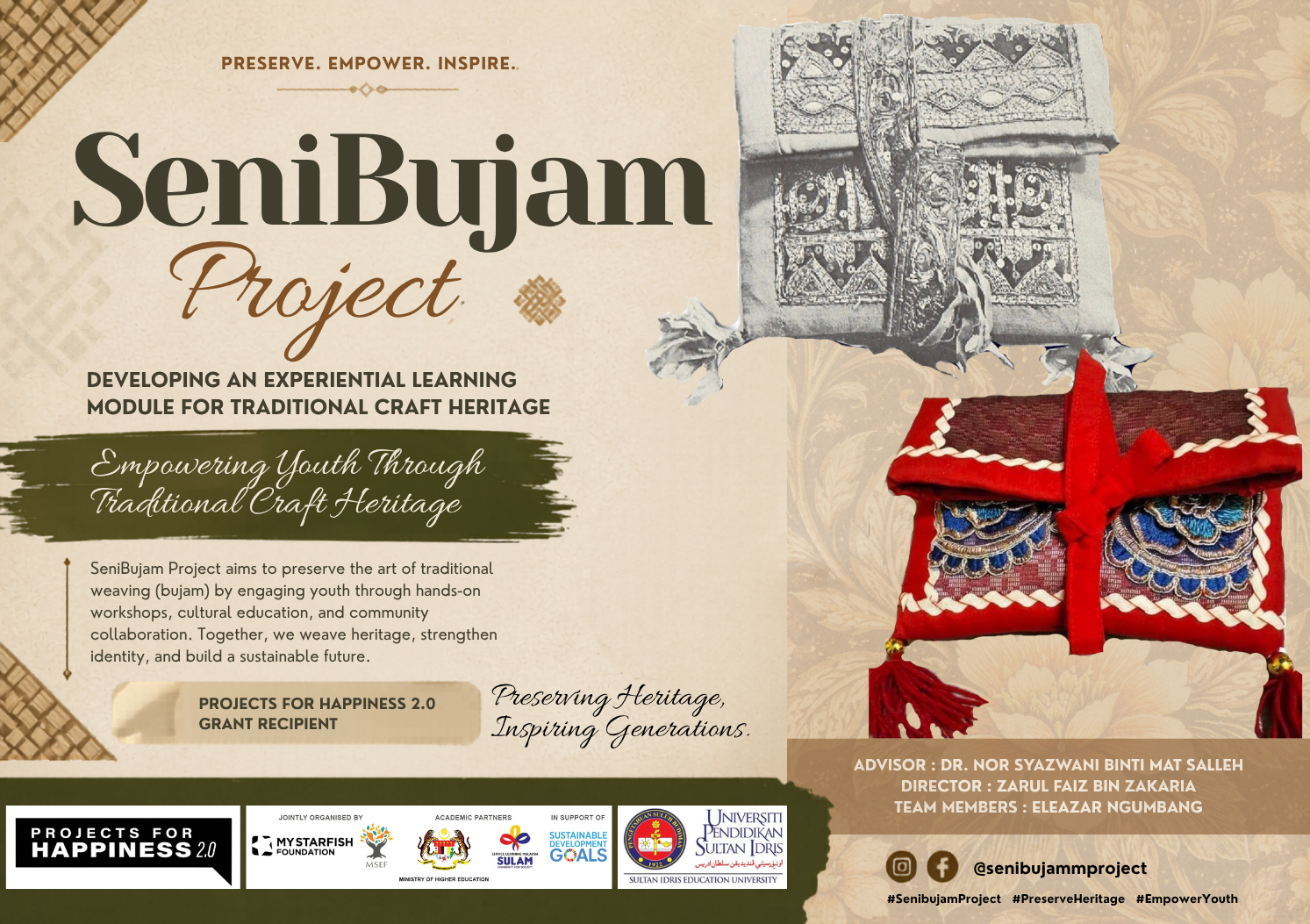
Traditional crafts are an important part of Malaysia’s cultural heritage and community identity. In Negeri Sembilan, traditional craft practices related to local culture and the values of Adat Perpatih reflect the knowledge, creativity, and skills passed down through generations. However, many of these traditional crafts, including the Bujam technique, are becoming less familiar among younger generations due to limited exposure and learning opportunities.
At the same time, youth in local communities often lack access to creative and skills-based activities that can strengthen cultural appreciation while developing practical abilities. Inspired by community-based initiatives similar to those promoted under the spirit of Program Sejati MADANI, this project seeks to empower youth through meaningful cultural engagement and hands-on learning.
The SeniBujam Project aims to introduce and revitalise the traditional Bujam craft among youth in Negeri Sembilan through experiential learning workshops with local craft practitioners. By combining traditional knowledge with creative activities, the project seeks to enhance youth creativity, strengthen appreciation for cultural heritage, and encourage community participation in preserving traditional crafts. Ultimately, this initiative hopes to contribute to sustaining traditional knowledge while empowering youth with creative skills and cultural awareness.
The SeniBujam Project will be implemented through several activities designed to introduce traditional craft skills and engage youth in creative learning.
First, a project preparation phase will be conducted to coordinate with local craft practitioners and community members in Kuala Pilah, as well as to recruit youth participants and prepare materials for the workshops.
Next, the project will organise hands-on SeniBujam workshops, where participants will be introduced to the background and cultural significance of the Bujam craft. Local craft practitioners will demonstrate the techniques and guide participants through practical sessions where they learn and practice the craft.
Participants will then take part in practical craft-making sessions, where they will produce their own Bujam craft pieces using the techniques learned during the workshops. These sessions will encourage creativity, skill development, and collaborative learning among participants.
Finally, the project will organise a mini exhibition and sharing session to showcase the works produced by participants. This activity will allow community members to learn about the Bujam craft and raise awareness about the importance of preserving traditional cultural heritage.
The SeniBujam Project aims to increase youth engagement in traditional craft practices while strengthening community appreciation for cultural heritage in Kuala Pilah. Through hands-on workshops and community participation, the project is expected to enhance creativity, practical craft skills, and cultural awareness among youth participants.
Expected outcomes and metrics include:
25–30 youth participants trained in basic Bujam craft techniques through workshop sessions.
At least 3 hands-on workshops conducted with guidance from local craft practitioners.
30–40 Bujam craft pieces produced by participants during the programme.
1 community mini exhibition organised to showcase participants’ works and promote awareness of traditional crafts.
50–70 community members reached through the exhibition and project sharing activities.
These outcomes will demonstrate the project’s impact in empowering youth with creative skills, encouraging cultural appreciation, and strengthening community participation in preserving traditional craft heritage.
 0 Days Left
22 Supporters
1 Favourited
0 Days Left
22 Supporters
1 Favourited


