

 Support this Project



 0 Days Left
 20 Supporters
 0 Favourited

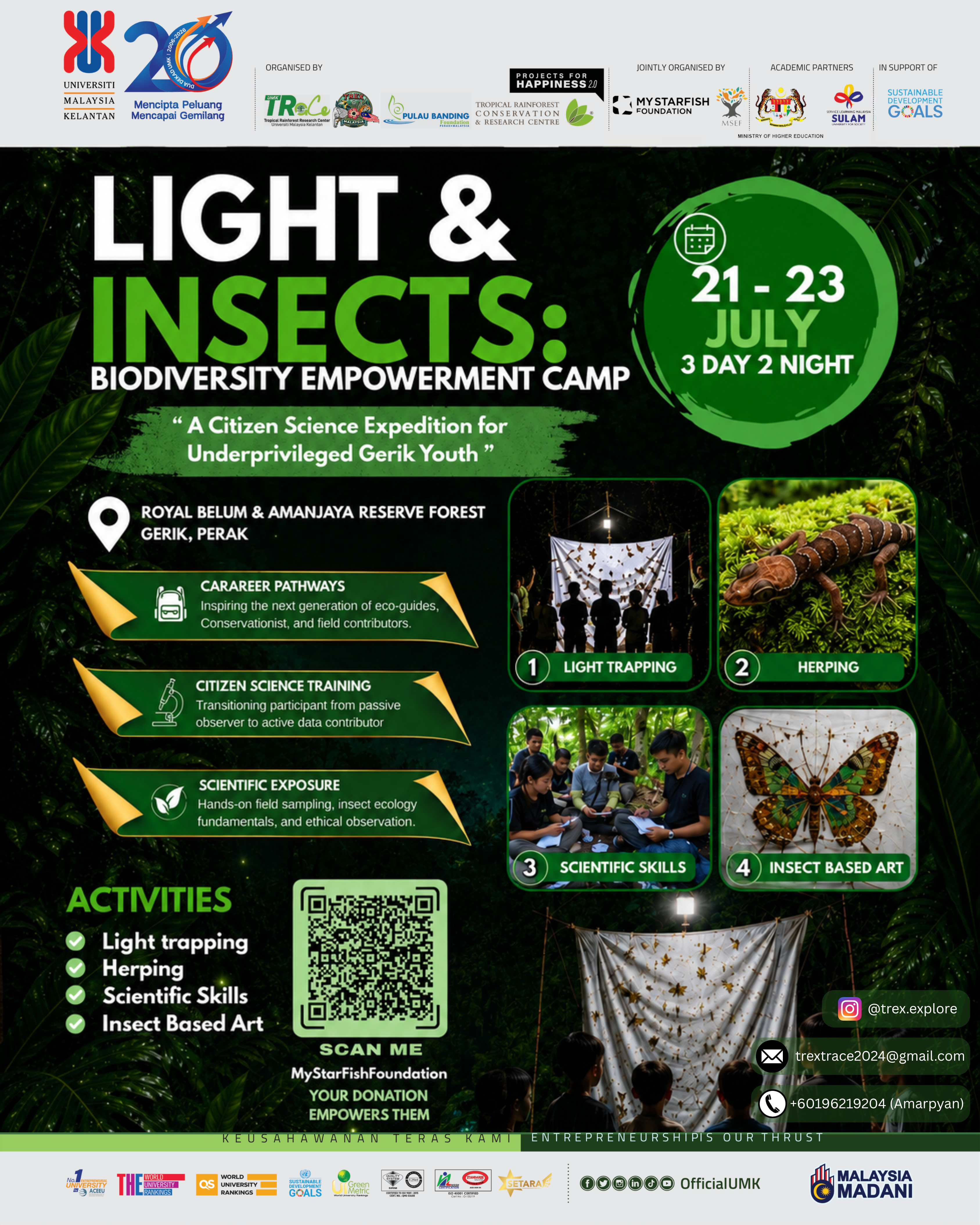
Gerik is located near the Belum–Temengor rainforest, one of Malaysia’s most important biodiversity areas. However, many underprivileged rural youths have limited access to scientific education, mentorship, and hands-on biodiversity learning. As a result, they often lack exposure to environmental careers and conservation opportunities despite living close to a globally significant ecosystem.
The Light & Insects: Entomology Camp for Gerik Youth aims to provide hands-on learning experiences in insect ecology, biodiversity research, and environmental conservation. Through a 3-day camp, participants will gain practical scientific skills, environmental awareness, and exposure to future education and career pathways in conservation.
The project will benefit the community by:
- Increasing environmental literacy among local youth.
- Promoting appreciation of the Belum–Temengor ecosystem.
- Developing leadership, teamwork, and scientific skills.
- Encouraging future participation in conservation initiatives.
Support from My Starfish Foundation and the public will help provide access to field equipment, learning materials, transportation, and expert mentorship for underprivileged youth. This project creates meaningful opportunities for rural students to develop confidence, discover their potential, and become future stewards of biodiversity and environmental conservation.
Vision
To inspire and empower a new generation of environmentally conscious youth who actively contribute to biodiversity conservation and sustainable natural resource management in Malaysia.
Mission
- To increase awareness and understanding of biodiversity conservation among underprivileged youth through experiential learning and environmental education.
- To provide hands-on exposure to scientific research and conservation practices, particularly in entomology, ecology, and tropical rainforest ecosystems.
- To cultivate environmental stewardship and leadership skills among participants, enabling them to become advocates for nature conservation within their communities.
- To bridge the gap between youth and conservation institutions by creating opportunities for interaction with researchers, conservation practitioners, and local stakeholders.
- To promote appreciation of Malaysia's natural heritage, especially the biodiversity of the Belum-Temengor landscape and surrounding forest ecosystems.
Project Objectives
- Educate at least 30 underprivileged youths aged 15–21 on biodiversity conservation concepts and practices.
- Introduce participants to insect diversity, light trapping techniques, and basic ecological research methods.
- Enhance participants' knowledge of rainforest ecosystems through field-based learning activities.
- Develop teamwork, communication, critical thinking, and leadership skills through group activities and conservation challenges.
- Encourage long-term youth involvement in environmental and conservation initiatives through mentorship and networking opportunities.
1. Activities at UMK-TRaCe, Pulau Banding (First Night)
- Introduction and Familiarization Session: Participants will be briefed about the UMK-TRaCe research center and undergo an ice-breaking session to get to know each other.
- Entomological Interpretation: A learning session in the library to learn about insect species and identification methods.
- Insect Assessment and Night Walk: Participants will be exposed to the method of installing light traps and data collection techniques in the field.
- Night Field Survey: Actively carry out insect hunting activities with experts starting at 7:45 pm until the session ends at 3:00 am.
2. Activities at TRLC, Hutan Simpan Amanjaya (Second Night)
- Location Transfer: Participants move from Pulau Banding to the Titiwangsa Range area to explore different ecosystems.
- Light Trap Installation: Install light traps at the TRCRC camping area.
- Insect Monitoring and Herping: Collecting data from light traps and performing herping activities (looking for reptiles/amphibians) at night.
- Collaborative Data Collection: Participants engage in data sharing to strengthen collaboration between the citizen science community and research institutions.
3. Closing Activities and Citizen Science
- Closing Ceremony: Held at the BDC Hall, UMK-TRaCe on the last day before the program ends completely at 12:00 noon.
- Data Integration: Strengthening collaboration through sharing data that has been collected over the two nights of the activity.
Expected Impact on the Community
The “Light & Insects: Entomology Camp for Gerik Youth” aims to create meaningful educational and environmental impact by increasing scientific exposure and environmental awareness among rural youth in Gerik.
The project seeks to:
Strengthen youth understanding of biodiversity and insect ecology
Increase confidence in participating in scientific and field-based activities
Encourage interest in conservation, higher education, and environmental careers
Build a foundation for long-term youth involvement in biodiversity stewardship
By empowering youth who live near the Belum–Temengor rainforest with practical scientific skills, the project contributes to nurturing informed and confident future custodians of their local ecosystem.
 0 Days Left
20 Supporters
0 Favourited
0 Days Left
20 Supporters
0 Favourited


