

 Support this Project



 0 Days Left
 20 Supporters
 1 Favourited


Period poverty remains a major issue among B40 and underserved communities.
Limited access to proper menstrual hygiene products and education.
Lack of awareness on sustainable menstrual health practices.
Financial burden of disposable sanitary products for low-income families.
Limited income opportunities for B40 women and single mothers.
Project RED promotes sustainable menstrual health education and empowerment.
Provides reusable pad-making workshops and hygiene support.
Creates potential livelihood opportunities through practical skills training.
Promotes dignity, health equity, and long-term community impact.
Project RED Vision
To create a future where every woman and girl, regardless of socio-economic background, has access to sustainable menstrual health solutions, knowledge, dignity, and opportunities for economic empowerment.
Project RED Mission
- To raise awareness and educate underserved communities on menstrual health, hygiene, and sustainable menstrual practices.
- To reduce period poverty by providing accessible and reusable menstrual hygiene solutions.
- To empower B40 women and single mothers through practical reusable pad-making skills and entrepreneurship opportunities.
- To promote health equity, dignity, and confidence among women and girls in underserved communities.
- To build sustainable communities by encouraging environmentally friendly menstrual health practices and creating long-term livelihood opportunities.
Project RED Objectives
- Educate at least 100 women and girls on menstrual health and hygiene.
- Conduct reusable pad-making workshops for B40 women and single mothers.
- Increase awareness of sustainable menstrual products and their benefits.
- Reduce the financial burden associated with disposable sanitary products.
- Equip participants with practical sewing and production skills that can generate income.
- Foster community support networks that advocate for women's health and empowerment.
Project Activities
Menstrual Health & Period Poverty Awareness Sessions
DIY Reusable Menstrual Pad Workshop
Practical Sewing & Skill-Building Training
Hygiene Kit Distribution
Safe Spaces & Reporting Awareness Sessions
Mobile Clinic & Free Health Screening
Community Engagement & Support Activities
Awareness Campaigns through Social Media & Community Outreach
Volunteer & NGO Collaboration Activities
Sustainable Menstrual Hygiene Education Workshops
Expected Project Result & Outcome
- Increased awareness on menstrual health and period poverty
- Improved access to sustainable menstrual hygiene solutions
- 50+ participants trained in reusable pad-making skills
- Distribution of reusable menstrual hygiene kits to underserved communities
- Reduced dependency on disposable sanitary products
- Increased awareness on safe spaces and reporting support systems
- Empowerment of B40 women through practical income-generating skills
- Improved community engagement in sustainable hygiene practices
- Strengthened collaboration between NGOs, healthcare partners, and communities
- Long-term positive impact on community health, dignity, and sustainability

Project Information
| University name | : | SEGi University |
| Project leader name | : | Yuwen Syaaran Ravindharan |
| Facebook link | : | https://www.instagram.com/w2w.my/ |
| Instagram link | : | https://www.instagram.com/w2w.my/ |
| Location of project held | : | DEWAN KOMUNITI PPR PEKAN BATU |
| Beneficiary | : | Women of PPR Pekan Batu |
| Number of beneficiaries | : | 51 |
Section I
1. Summary of project goals with two sentences.
Project R.E.D. (Respect, Educate & Dignity) aims to address period poverty, improve menstrual health awareness and empower underprivileged women, particularly single mothers and women from B40 communities, through sustainable menstrual hygiene education and practical reusable sanitary pad sewing workshops. Beyond providing essential skills training, the project seeks to establish a sustainable pathway from skills development to livelihood opportunities by equipping women with entrepreneurial knowledge, financial literacy, product development and digital marketing skills, enabling them to transform their newly acquired sewing abilities into potential income-generating activities and achieve long-term financial independence.
2. Did other fund-raising efforts contribute to your projects? What were they?
Yes. In addition to the seed grant received from My Starfish Foundation (MSF), Project R.E.D. successfully conducted an additional public crowdfunding initiative to strengthen its financial resources and support the implementation of its two-day programme.
Financial Breakdown:
| Funding Source | Amount |
|---|---|
| Seed Grant (My Starfish Foundation) | RM 4,000.00 |
| Public Crowdfunding | RM 1,571.00 |
| Total | RM 5,571.00 |
The additional crowdfunding effort enabled the organising team to secure sufficient resources to conduct both the reusable sanitary-pad sewing workshop and the business and entrepreneurial masterclass.
Financial Utilisation: The project's expenditure primarily supported the delivery of the entrepreneurial masterclass, including trainer remuneration and educational materials and learning kits provided to participants. These materials were designed to help women understand and apply the business concepts introduced during the sessions.
Community and Organisational Support: Beyond financial contributions, the project received valuable collaboration and operational support from several organisations. SEGi University's Business & Entrepreneurial Club played an important role as part of the organising team, particularly in financial management, treasury responsibilities and project coordination. MIYC Kepong supported catering and logistical arrangements, while WISH NGO and WomenCollective contributed to menstrual health awareness through educational talks, interactive quizzes and community engagement activities.
Additionally, Bidadari NGO, represented by Ms Napsiah Khamis, facilitated the reusable-pad sewing workshop, while ReSari Social Enterprise, represented by Ms Salinee Ganeson, conducted the business and entrepreneurial masterclass. Mrs Ananthi, the PPR Pekan Batu community leader, also provided essential community-level support in facilitating the programme and connecting the organising team with local residents.
These collaborations were instrumental in bringing together expertise in women's empowerment, menstrual health, entrepreneurship and community development.
3. Provide details about how your project actually worked.
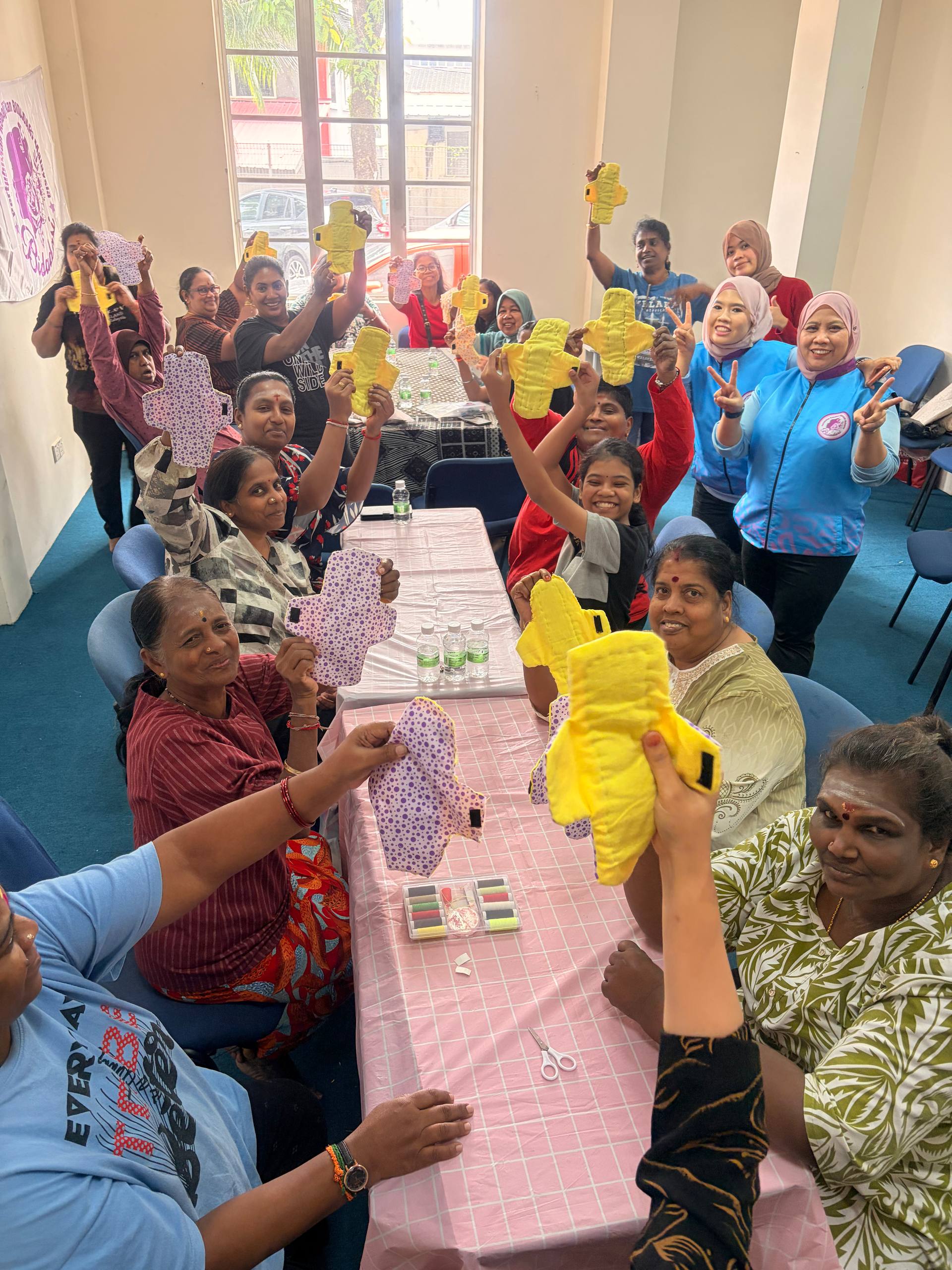
Project R.E.D. was successfully implemented as a two-day community empowerment programme on 17 and 18 October 2026 at Dewan PPR Pekan Batu, Kuala Lumpur. The programme brought together 51 women aged between 16 and 71 from PPR Pekan Batu and surrounding communities, including PPR Intan Baiduri and Taman Wahyu.
The project was executed through two main phases, focusing on transforming menstrual health awareness into practical skills and subsequently developing those skills into potential livelihood opportunities.
Phase 1: Reusable Sanitary-Pad Sewing Workshop (17 October 2026, Saturday)
The first phase was conducted from 9.00 AM to 1.00 PM at Dewan PPR Pekan Batu, attracting 24 participants. The workshop was facilitated by Bidadari NGO, represented by Ms Napsiah Khamis.
The programme commenced with menstrual health education, introducing participants to menstrual hygiene management, period poverty and the importance of accessible, affordable and sustainable menstrual hygiene products. WISH NGO and WomenCollective also contributed to raising awareness through educational talks, interactive discussions and quizzes, ensuring that participants understood the importance of menstrual health and hygiene.
Following the educational component, participants proceeded to the practical reusable sanitary-pad sewing workshop. Under the guidance of the trainer, participants learned how to construct reusable sanitary pads using suitable fabrics and sewing techniques. The session emphasised the importance of sustainable menstrual hygiene alternatives while introducing women to practical sewing skills that could potentially be developed into small-scale home-based businesses.
The outcome was particularly encouraging, as all participants successfully completed their reusable sanitary pads during the workshop. More remarkably, three women were so enthusiastic about the skills they had acquired that they returned home and independently sewed additional reusable pads using their own creativity. They proudly presented their handmade products to the organising team on the following day, demonstrating their confidence, initiative and willingness to continue practising beyond the workshop.
This phase successfully demonstrated that menstrual health education could be combined with practical sustainability initiatives to equip women with useful skills while addressing period poverty.
Phase 2: Business & Entrepreneurial Masterclass (18 October 2026, Sunday)
The second phase was conducted from 9.00 AM to 1.00 PM at the same venue, attracting 27 participants. The masterclass was facilitated by ReSari Social Enterprise, represented by Ms Salinee Ganeson.
Unlike conventional sewing workshops, this session focused on helping women understand how to transform their existing skills and abilities into income generating opportunities. The masterclass was designed particularly for women who had participated in the first phase, alongside other single mothers and women from low-income backgrounds who were interested in developing their entrepreneurial capabilities.
The session covered several important areas of entrepreneurship, including:
-
Business Development: Understanding how to establish a small-scale or home-based business using existing skills and available resources.
-
Product Development: Improving product quality, presentation, design, packaging and branding to increase market appeal.
-
Financial Literacy: Learning basic costing, pricing strategies, budgeting, profit calculation and financial record-keeping.
-
Digital Marketing: Understanding how to promote products and services through social media platforms, particularly TikTok.
-
Content Creation: Introducing participants to creating simple promotional videos, showcasing their products and using TikTok LIVE as a potential sales and marketing channel.
-
Entrepreneurial Confidence: Encouraging women to recognise their abilities, explore business opportunities and become more financially independent.
A particularly valuable aspect of the masterclass was its practical and interactive approach. Participants were encouraged to establish their own TikTok accounts, create and publish at least one introductory video showcasing their business or entrepreneurial journey, and participate in trial live-hosting sessions. This provided them with an initial opportunity to experience digital entrepreneurship rather than merely learning theoretical business concepts.
The session also benefited eight women who were already operating small businesses, including clothing sales, homemade cookies and nasi lemak. Through the masterclass, these existing entrepreneurs gained additional knowledge and practical insights that could help improve their business operations, marketing strategies and online visibility.
The feedback received was highly encouraging, with participants expressing that the knowledge gained was useful and relevant to their existing and future business aspirations.
Overall Programme Implementation:
Both phases were designed to complement one another, establishing a practical progression from awareness and skills development to entrepreneurship and potential income generation.
The first day focused on menstrual health education, sustainable hygiene and reusable-pad production, while the second day concentrated on equipping women with the business knowledge and digital skills required to explore economic opportunities.
Across both days, the programme successfully engaged 51 women, exceeding the initial minimum target of 10 women. The organising team also prioritised interactive learning through group discussions, mahjong-paper activities, quizzes, games and practical demonstrations to ensure participants remained engaged and could understand the information presented.
4. Were there unanticipated difficulties? Budget constraints?
Although Project R.E.D. was successfully implemented, the organising team encountered several unexpected challenges during the preparation and execution process.
-
Venue Confirmation Delays: One of the main challenges was the delay in securing final confirmation for the programme venue at Dewan PPR Pekan Batu. Since the project involved community participation, trainer arrangements, educational materials and logistical coordination, the uncertainty surrounding venue confirmation affected the original preparation timeline and delayed the overall execution of the project.
-
Funding Processing Delays: The team also experienced delays in the processing and availability of project funding. This affected the timeline for confirming certain arrangements and coordinating payments to the trainers and other programme-related requirements. The organising team had to manage its preparations carefully to ensure that the programme could proceed successfully despite these delays.
-
Budget Management: With a total of RM5,571 raised through the seed grant and crowdfunding, the team had to allocate its financial resources carefully to support two different training components. Particular attention was given to trainer remuneration and the provision of educational materials and learning kits for the entrepreneurial masterclass.
Despite these challenges, the organising team demonstrated adaptability, effective coordination and financial responsibility, ensuring that the intended activities were successfully conducted without compromising the quality of the programme.
5. Language or cultural barriers?
As the programme primarily targeted women from PPR and low-income residential communities, the organising team recognised the importance of making the educational content accessible, relatable and easy to understand.
Most of the sessions were therefore conducted in Bahasa Melayu, with simple, everyday language used when explaining scientific, menstrual-health and business-related terminology. This approach ensured that participants from different educational backgrounds could understand the information without feeling overwhelmed by technical vocabulary.
The team also adopted a highly interactive learning approach rather than relying entirely on conventional presentations or lectures. Activities included:
-
Mahjong-paper exercises and group discussions to encourage participants to share their opinions and experiences.
-
Interactive quizzes to reinforce menstrual health and hygiene knowledge.
-
Games and practical activities to make learning more enjoyable.
-
Two-way discussions between trainers and participants to encourage questions, feedback and knowledge sharing.
-
Hands-on sewing demonstrations and practical entrepreneurial exercises to reinforce the lessons delivered.
Menstrual health can be a sensitive subject in certain communities. Therefore, the team emphasised respectful communication, inclusivity and a comfortable learning environment where women could participate without feeling embarrassed or judged.
These efforts helped establish a welcoming atmosphere and encouraged active participation throughout both days of the programme.
6. What worked well? What didn’t work well?
What worked well:
Several aspects of Project R.E.D. exceeded the organising team's initial expectations.
Firstly, community participation was particularly encouraging. The programme initially aimed to engage a minimum of 10 women, but successfully reached 51 women across both days, aged between 16 and 71. The participation of women from neighbouring communities, including PPR Intan Baiduri and Taman Wahyu, further demonstrated the relevance and appeal of the initiative beyond its original target location.
Secondly, the combination of menstrual health education and practical sewing activities proved highly effective. All participants successfully completed their reusable sanitary pads during the first-day workshop. More significantly, three participants independently continued sewing additional products at home using their own creativity and proudly shared their work with the organising team the following day. This demonstrated that the workshop had successfully inspired participants to apply their newly acquired skills independently.
Thirdly, the business and entrepreneurial masterclass provided valuable knowledge to participants with different levels of business experience. Eight women who were already operating small businesses, including clothing, cookies and nasi lemak sales, shared positive feedback about the usefulness of the session. The practical introduction to TikTok marketing, content creation and live hosting also encouraged participants to explore digital platforms as potential tools for promoting their businesses. All participating women were encouraged to open TikTok accounts, publish an introductory business-related video and experience trial live-hosting sessions.
Furthermore, the interactive teaching approach contributed significantly to the programme's effectiveness. The use of group discussions, quizzes, games and practical activities made the sessions more engaging and ensured that participants could understand and apply the information shared.
Lastly, the feedback received from participants was particularly encouraging. Many expressed interest in joining future classes and continuing to develop their sewing and entrepreneurial skills. This demonstrated that the programme addressed genuine community needs and created interest in further learning opportunities.
What didn't work well:
The main shortcoming was the delay in project execution caused by the late confirmation of the venue and the processing of project funding. These administrative and logistical delays affected the original preparation timeline and required the organising team to adjust its arrangements accordingly.
Upon reflection, earlier venue coordination and a more structured funding-processing timeline would have helped the team prepare more efficiently. In future programmes, the organising team should establish earlier confirmation deadlines, maintain alternative venue arrangements and ensure that financial approvals are completed sufficiently ahead of the implementation dates.
Additionally, although the programme successfully introduced participants to entrepreneurship and digital marketing, transforming these initial learning experiences into sustainable income-generating businesses requires continuous guidance, mentoring and follow up support. This is an important area for improvement and development in the next phase of Project R.E.D.
7. How many people benefited or will benefit from your project? Who are these people?
Project R.E.D. successfully engaged a total of 51 women across its two-day programme, exceeding the initial target of at least 10 women. Participants ranged from 16 to 71 years old and included single mothers, women from low-income households, existing small-business owners and other members of the surrounding residential communities.
Direct Beneficiaries: The 51 women who participated in the programme benefited directly from the educational and practical activities conducted across both days. The first-day workshop provided menstrual health education and practical reusable sanitary-pad sewing skills, while the second-day masterclass introduced business development, financial literacy, product promotion and digital marketing.
An encouraging outcome was that all participants successfully produced reusable sanitary pads during the first-day workshop. Three women independently continued sewing additional pads at home, demonstrating their willingness to practise and develop their skills further.
The second-day masterclass also provided additional support to eight women who were already operating small businesses involving clothing, cookies and nasi lemak. These participants gained practical insights into improving their businesses and exploring digital marketing opportunities.
Secondary Beneficiaries: The project also has the potential to benefit the families and dependents of participating women, particularly single mothers and women from low-income households. By equipping these women with practical skills and entrepreneurial knowledge, the initiative seeks to create opportunities for additional household income and improved financial stability.
The wider PPR Pekan Batu residential community and neighbouring areas, including PPR Intan Baiduri and Taman Wahyu, also benefited from increased awareness of menstrual health, sustainable hygiene practices and women's economic empowerment.
Indirect Beneficiaries: Beyond the immediate participants, the project has the potential to reach additional community members through social media awareness, participants' business activities and future community engagement programmes. NGO partners, youth volunteers and other supporting organisations also gained valuable experience in delivering community-based menstrual health education and women's empowerment initiatives.
The project further creates opportunities for future participants to benefit through a peer-to-peer knowledge-sharing approach, whereby women who have acquired sewing skills can eventually guide and train others within their communities.
Overall, Project R.E.D. successfully reached 51 direct participants, with its broader impact extending to families, community members and potential future beneficiaries through continued skills development and entrepreneurial activities.
8. What is the long-term impact and sustainability of this project? Is there a future for your project?
The long-term impact of Project R.E.D. lies in creating a sustainable pathway that connects menstrual health education, practical skills development and women's economic empowerment. Rather than limiting its intervention to distributing menstrual hygiene products or conducting one off awareness sessions, the project adopts a livelihood oriented approach that equips underprivileged women with practical capabilities that can potentially generate long-term social and economic benefits.
One of the project's most significant outcomes was the successful completion of reusable sanitary pads by all participants during the first-day workshop. The initiative demonstrated how practical sewing skills can be introduced as an accessible activity that promotes sustainable menstrual hygiene while creating opportunities for women to develop their own products. The enthusiasm shown by three participants who independently produced additional pads at home further highlighted the potential for continued skills development beyond the initial workshop.
The second phase strengthened this approach by introducing participants to entrepreneurship, financial literacy, product development and digital marketing. By encouraging women to establish TikTok accounts, create business-related content and experience trial live hosting, the project introduced accessible digital tools that could support their future business activities. The participation of eight existing small-business owners also demonstrated the relevance of entrepreneurial education to women who are already generating income through informal or home-based businesses.
Community-Based Skills Transfer and Sustainability: Moving forward, the organising team intends to follow the entrepreneurial journeys of participating women through continuous engagement, mentoring and business development support. One of the key sustainability strategies is to identify women who demonstrate strong interest and commitment in reusable-pad production and gradually develop them into community trainers.
These women will eventually be encouraged to conduct peer-to-peer sewing sessions and share their knowledge with other women within their residential communities. This train-the-trainer approach will reduce dependence on external trainers while allowing the programme to expand its reach through local leadership and community participation.
Economic Empowerment and Social Enterprise Development: Another long term objective is to support interested participants in transforming their sewing skills into home based microbusinesses. Through continued mentoring, women can be guided in product improvement, costing, pricing, branding, packaging and digital marketing. Potential sales channels include community networks, social media platforms, online marketplaces and local bazaars.
By connecting skills development with entrepreneurial opportunities, Project R.E.D. seeks to empower women to become self-reliant income earners while creating a sustainable community-based model of women's economic participation.
Future Expansion and Partnerships: Project R.E.D. also has the potential to expand into other PPR communities and underserved residential areas across the Klang Valley. Through continued collaboration with SEGi University's Business & Entrepreneurial Club, WISH NGO, WomenCollective, Bidadari NGO, ReSari Social Enterprise, MIYC Kepong and other potential community partners, the initiative aims to strengthen its educational, entrepreneurial and community outreach capabilities.
The project will also explore opportunities to establish regular follow-up classes, advanced sewing workshops, entrepreneurial mentoring sessions and platforms for participants to showcase and sell their products.
Ultimately, Project R.E.D. envisions a sustainable cycle in which women are first educated about menstrual health, then equipped with practical sewing skills, and subsequently empowered with entrepreneurial knowledge to create income opportunities. By developing former participants into future trainers and community role models, the project aims to multiply its impact beyond its initial beneficiaries.
Project R.E.D. is therefore not merely a menstrual health awareness programme, but a long-term women empowerment initiative that seeks to transform knowledge into skills, skills into opportunities, and opportunities into financial independence and dignity.
Section II
1) How does or will your project contribute to happiness? Short-term? Long-term?
In the short term, Project R.E.D. contributed to happiness by creating a welcoming and supportive environment where women from different age groups and socioeconomic backgrounds could come together, learn new skills and participate in meaningful activities. The two-day programme provided participants with opportunities to interact, exchange experiences and develop new friendships while learning about menstrual health, sustainable hygiene practices and entrepreneurship. The interactive approach, which included group discussions, quizzes, games and practical sewing activities, helped make the learning experience enjoyable, engaging and accessible. The enthusiasm shown by participants throughout the programme, particularly when they successfully completed their own reusable sanitary pads, reflected a sense of accomplishment, confidence and satisfaction.
One particularly encouraging experience was witnessing three women independently continue sewing additional reusable pads at home after attending the first-day workshop. They returned the following day proudly showcasing their handmade products, demonstrating their excitement and willingness to explore their newly acquired skills. Similarly, the second day entrepreneurial masterclass generated positive responses, particularly among women who were already operating small businesses. The opportunity to learn about digital marketing, content creation and TikTok LIVE hosting allowed participants to discover new possibilities for promoting their products and potentially increasing their household income. The excitement of creating their first business-related videos and exploring digital platforms also contributed to a sense of empowerment and achievement.
In the long term, Project R.E.D. aims to contribute to lasting happiness by helping women build greater confidence, financial independence and control over their livelihoods. For single mothers and women from low-income households, having the ability to produce reusable sanitary products, develop entrepreneurial skills and potentially establish home-based businesses can create a meaningful sense of security and self-reliance. Beyond financial benefits, improving menstrual health awareness also contributes to personal dignity, confidence and the ability to make informed decisions about one's own health.
The project's long-term vision is to continue following the business journeys of participating women and eventually develop selected participants into community trainers who can share their knowledge with other women. Through this peer-to-peer approach, Project R.E.D. hopes to establish a supportive community where women uplift one another, exchange experiences and collectively create opportunities for economic growth. Ultimately, the project recognises that happiness is not simply about receiving assistance, but also about gaining the confidence, knowledge, skills and independence to improve one's own circumstances and contribute positively to the lives of others.
2) Has your project changed the way you think about the world? How has it changed you?
Leading and implementing Project R.E.D. fundamentally strengthened the team's understanding of the relationship between period poverty, gender equality and economic inequality. Although menstrual hygiene is a natural and essential aspect of women's health, access to menstrual education and sustainable hygiene alternatives is not equally experienced by everyone. Engaging directly with women from PPR communities highlighted the importance of making menstrual health education accessible, particularly for women and girls from underprivileged backgrounds. The experience reinforced the understanding that menstrual dignity should not be determined by an individual's financial circumstances, educational background or social position.
Furthermore, the project challenged the team's initial perception that providing practical skills alone would be sufficient to empower women. Through the two day programme, the organising team recognised that skills development becomes significantly more meaningful when participants are also equipped with the knowledge and confidence to turn those skills into sustainable livelihood opportunities. The transition from reusable sanitary-pad sewing to entrepreneurial education demonstrated that empowerment should go beyond short-term assistance. It should provide individuals with the necessary tools, opportunities and continuous support to improve their own economic circumstances.
One of the most meaningful experiences was observing three women independently continue sewing reusable pads at home after the first workshop. Their initiative demonstrated that participants were not merely attending a programme to receive information, but were actively applying what they had learned. Similarly, the participation of eight existing small-business owners in the entrepreneurial masterclass highlighted that many women already possess entrepreneurial potential, creativity and determination, but may require additional guidance in areas such as financial literacy, branding, marketing and digital business development.
The experience also broadened the team's understanding of how technology can create more accessible economic opportunities for women. By introducing participants to TikTok content creation and live hosting, the programme demonstrated that digital platforms can provide alternative marketing channels for individuals who may not have the financial resources to establish conventional businesses. Witnessing participants take their first steps towards promoting their products online reinforced the importance of making entrepreneurial education practical, inclusive and relevant to the changing economic landscape.
Ultimately, Project R.E.D. strengthened the team's belief that sustainable social impact requires more than good intentions or temporary interventions. It requires listening to communities, understanding their actual needs and developing solutions that enable people to become active contributors to their own progress. The experience also reinforced the importance of dignity in community development: rather than viewing underprivileged women solely as beneficiaries requiring assistance, the project recognised them as capable individuals with existing strengths, knowledge, creativity and entrepreneurial potential.
Most importantly, this journey encouraged the organising team to look beyond the immediate success of conducting a workshop and consider what happens after the programme ends. It strengthened the commitment to build lasting relationships with participants, follow their entrepreneurial journeys and create opportunities for them to eventually become trainers and mentors for other women. Project R.E.D. therefore transformed the team's understanding of empowerment from simply providing help to creating an environment where women can develop, lead, earn and empower others.
“Project R.E.D. has shown me that meaningful change goes beyond providing assistance; it is about equipping women with the knowledge, skills and confidence to build a better future for themselves. The most important lesson I learned is that when we create opportunities for women to become financially independent and empower them to empower others, we create an impact that can continue beyond the project itself.” - Iqin Mustafa
0 Days Left
20 Supporters
1 Favourited


