

 Support this Project



 0 Days Left
 28 Supporters
 2 Favourited


UnLABEL addresses the growing normalization of everyday racial steroetyping among youth, where jokes, assumptions, labels and casual comments are often dismissed as harmless despite shaping perception, empathy and social inclusion. In a multicultural society like Malaysia, these repeated stereotypes can quietly weaken intercultural understanding and unity. Through immersive activities, cultural participation and experiential design, UnLABEL transform awareness into empathy by helping young people recognise, experience and collectively challenge the impact of labels in everyday life.
1. Pre-Event Social Media Awareness Campaign
Launch the #BeforeULabel Instagram campaign featuring awareness posts, reels, polls, anonymous label-sharing prompts, discussion questions and participant engagement content to raise awareness on everyday stereotyping among youth.
2. Wrist Label Interaction Experience
Participants receive wrist labes based on stereotypes related to appearance, language ability and social behavior. Interactive AR experiences and QR code activvations will transform invisible social labels into immersive visual experiences.
3. UnLABEL Card Game Sessions
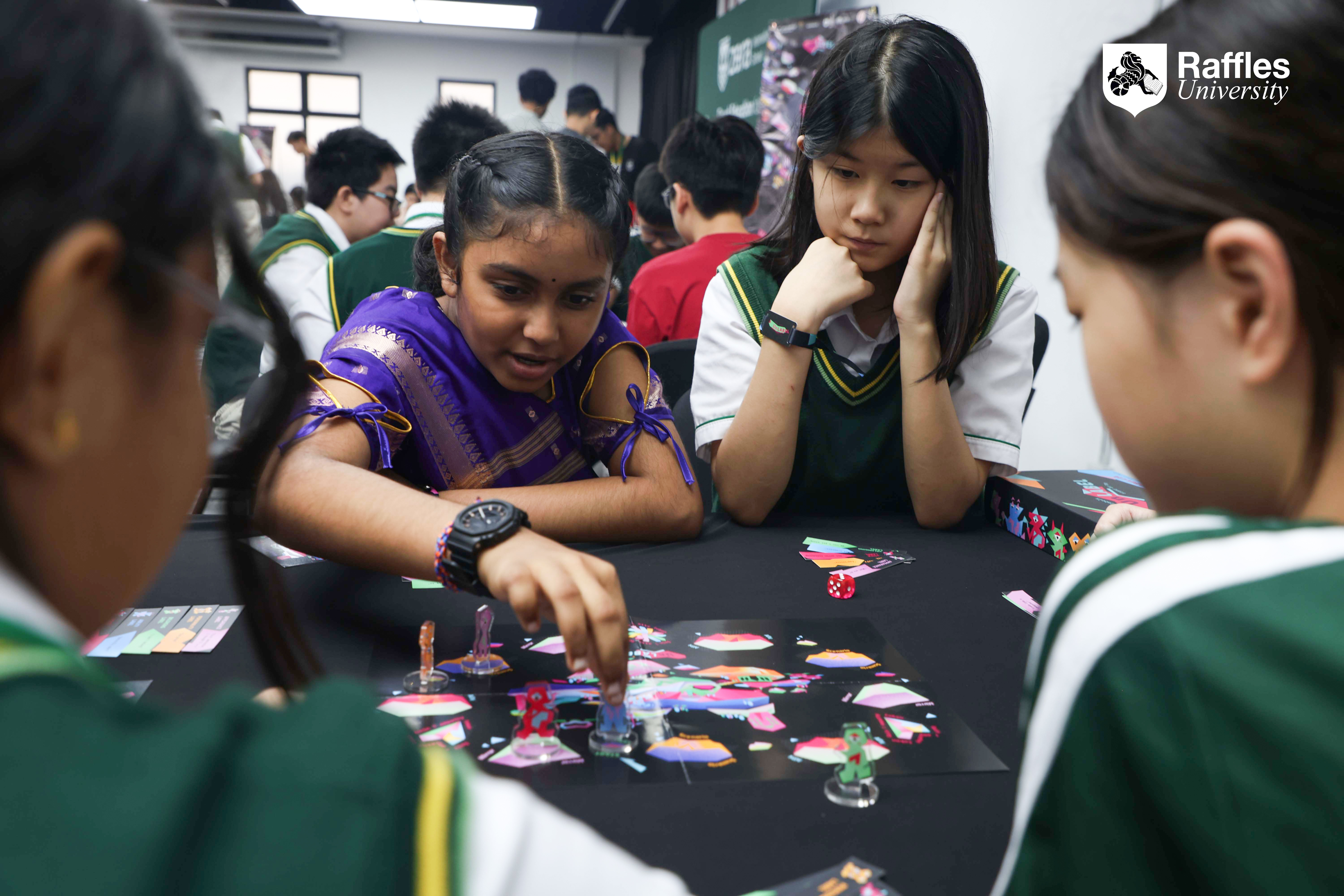
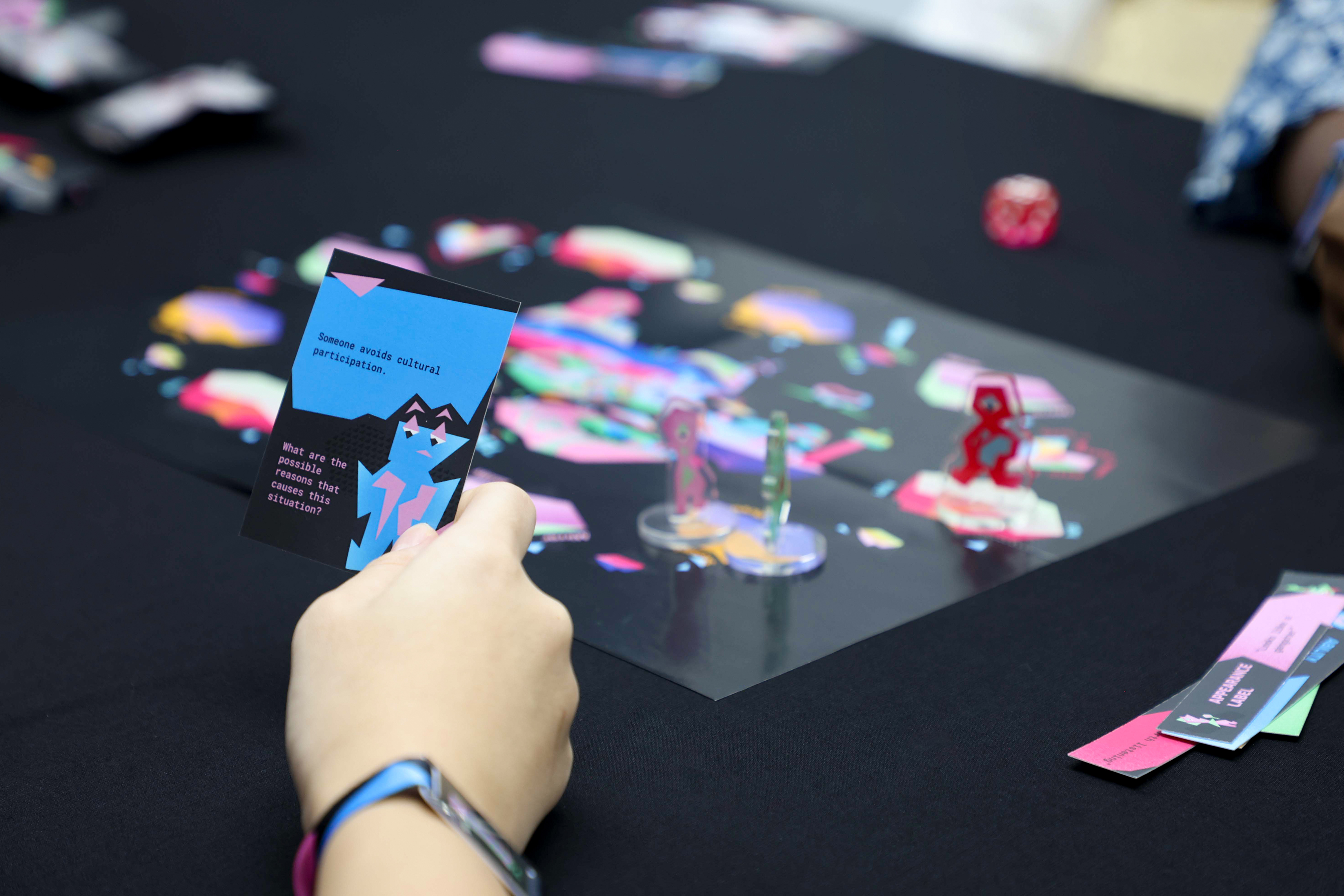
Conduct empathy-based interactive card game sessions where participants experience stereotype-related scenarios, self-reflection challenges, ally support activities and peer-pressure simulations to encourage dialogue, empathy and collective understanding.
4. Intercultural Actvity Space
Organise cultural participation booths and shared activities including traditional art, cultural interaction stations, dialogue activites and the UnLABEL Wall installation to encourage intercultural connection beyond stereotypes.
5. Reflection & UnLABEL Wall Installation
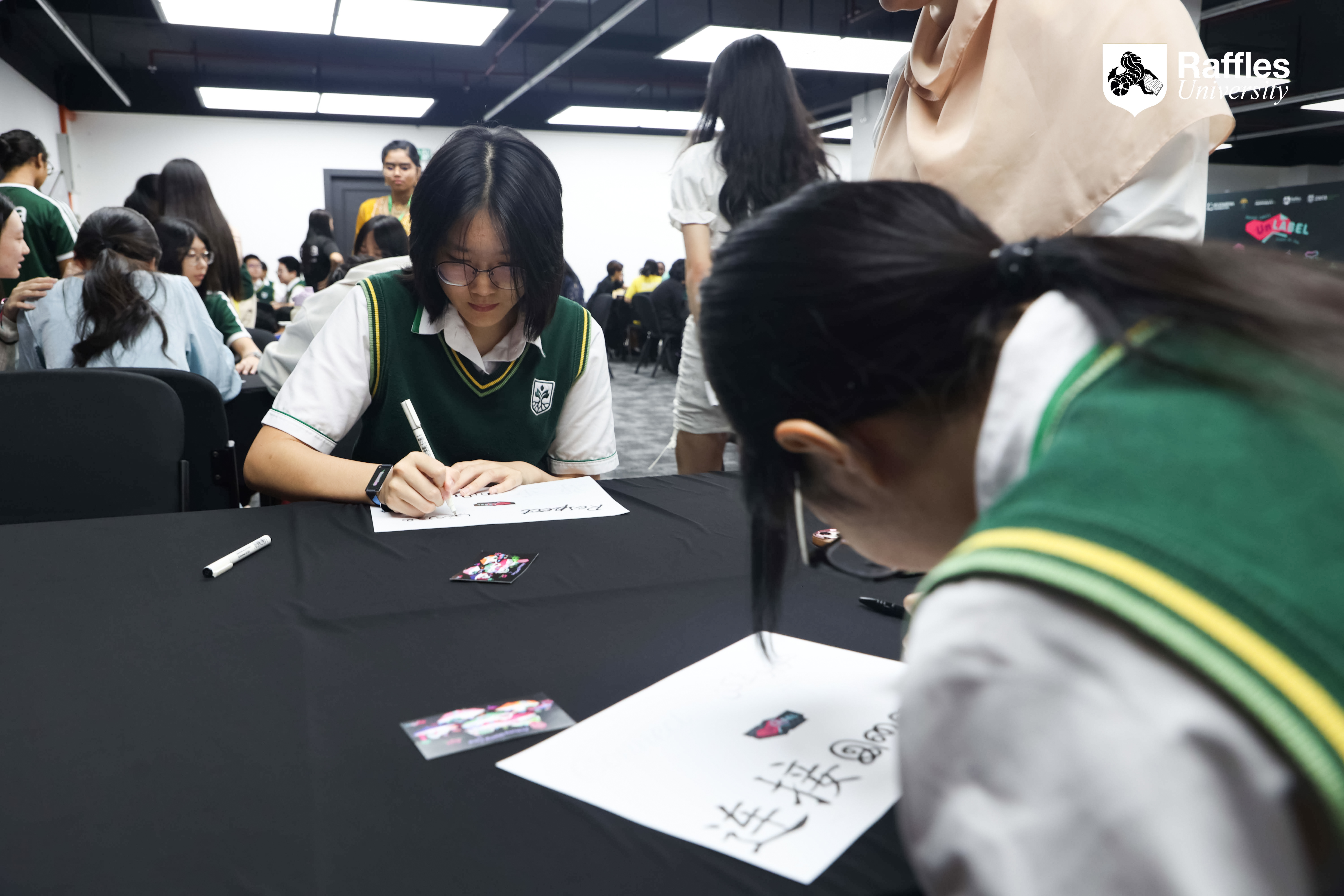
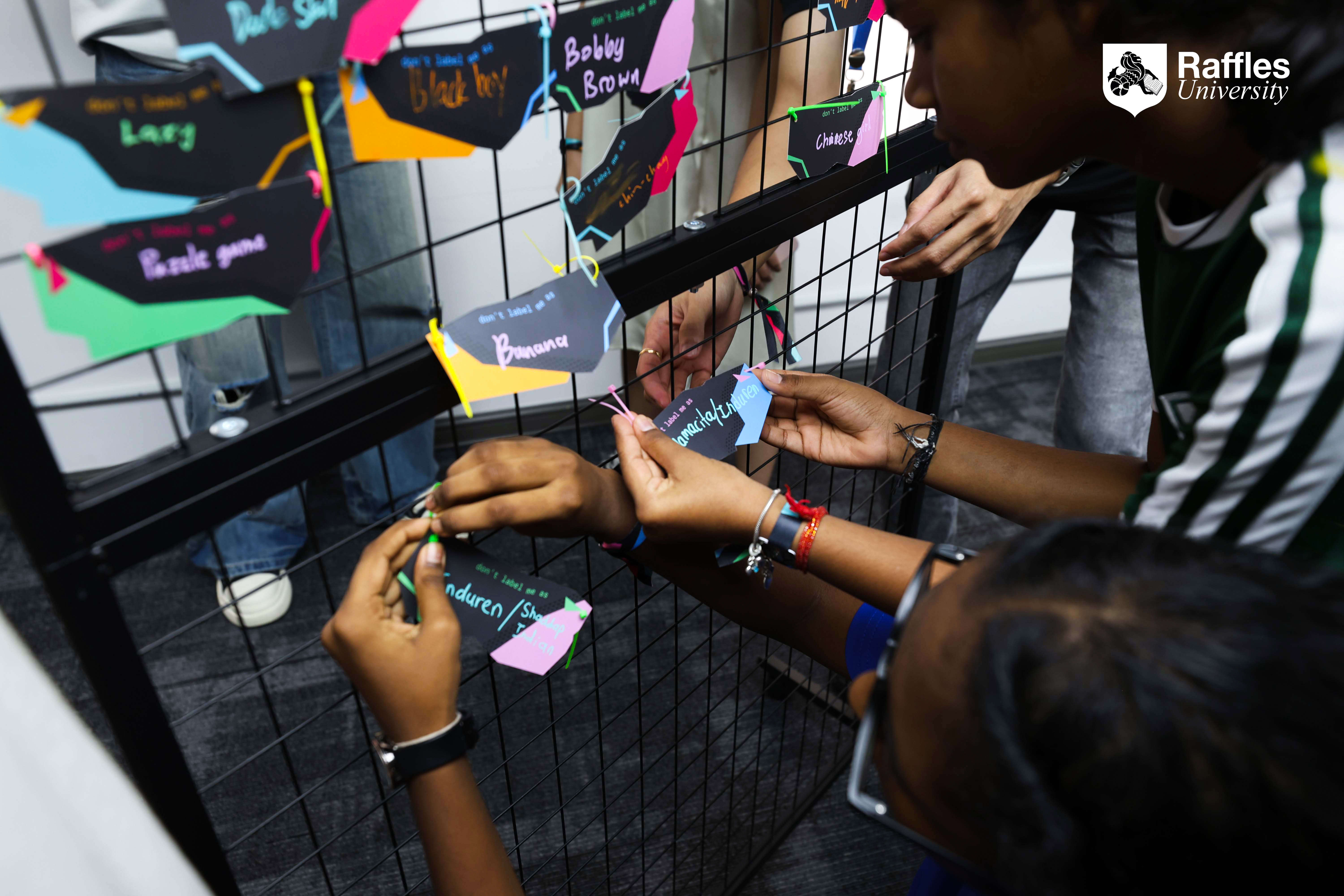
Participants write and share personal experiences, labels and reflections through the "Don't Label Me As..." reflection activity and interactive UnLABEL Wall installation.
6. Collective Unlabelling Ritual & Unity Pledge
Facilitate a symbolic closing ritual where participants collectively remove or tear labels and sign a unity pledge promoting empathy, respect and inclusivity beyond stereotypes.
7. Documentation, Survey & Impact Collection
Conduct pre- and post-event surveys, collect participant reflections, document event activites through photography and videography and prepare an impact report, recap video and facilitator toolkit for future school adoption.
- Increased awareness on everyday racial stereotyping among youth
- Stronger empathy and intercultural understanding through interactive participation
- Engagement of 100-150 youth partipants across 3 pilot communities
- Development of youth leadership, communication and facilitation skills
- Creation of reusable educational materials, toolkit and awareness activities
- Strengthened unity and respectful communication among multicultural communities
- Potential for future school adoption, MPU-related learning and annual unity programmes
- Long-term development of a repeatable youth-led cultural understanding initiative

Project Information
| University name | : | Raffles University Iskandar (RUI) |
| Project leader name | : | Lee En Ling |
| Facebook link | : | https://www.facebook.com/share/1K5z9A1bQ8/ |
| Instagram link | : | https://www.instagram.com/unlabelcampaign?srtk=dm5hNG83NXUwZ2w5 |
| Project implementation date | : | 2026-08-07 |
| Location of project held | : | Raffles University, 100 Lambs International School, ZERA International School, Sunway Big Box |
| Beneficiary | : | Students, youth, educators and university staff from participating educational institutions, including 100 Lambs International School, Zera International School and Raffles University, as well as Raffles University's Graduation Show held in Sunway Big Box, Children with special needs from Aurora Intervention Centre |
| Number of beneficiaries | : | 301 |
Section I
1. Summary of project goals
UnLABEL aimed to help young people look beyond racial differences, question assumptions and develop empathy, cultural understanding and respect for diversity. It was also designed as an adaptable social awareness framework with the long-term goal of helping people recognize individuals beyond their labels and build more inclusive communities.
2. Did other fund-raising efforts contribute to your projects? What were they?
Yes. The project was supported by a RM5,000 grant from My Starfish Foundation and MSEF. The remaining project expenses were supported with an additional RM832 through self-funding.
3. Provide details about how your project actually worked.
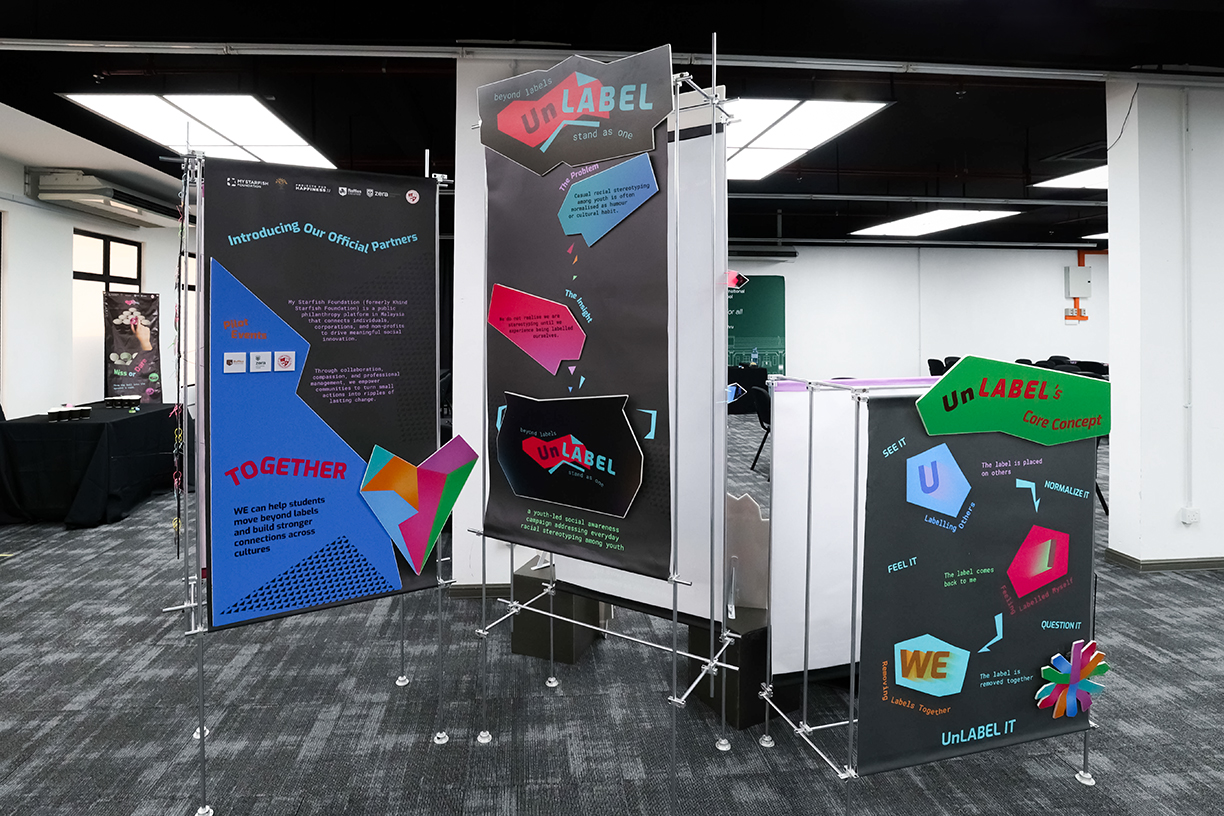
UnLABEL was implemented as an experiential youth social awareness campaign, turning the issue of racial stereotyping into something participants could encounter, discuss and reflect on together. Our approach followed the U-I-WE framework: recognizing how “U” may label others, reflecting on how “I” feel when labelled and moving towards “WE”, where stereotypes are collectively questioned and challenged.
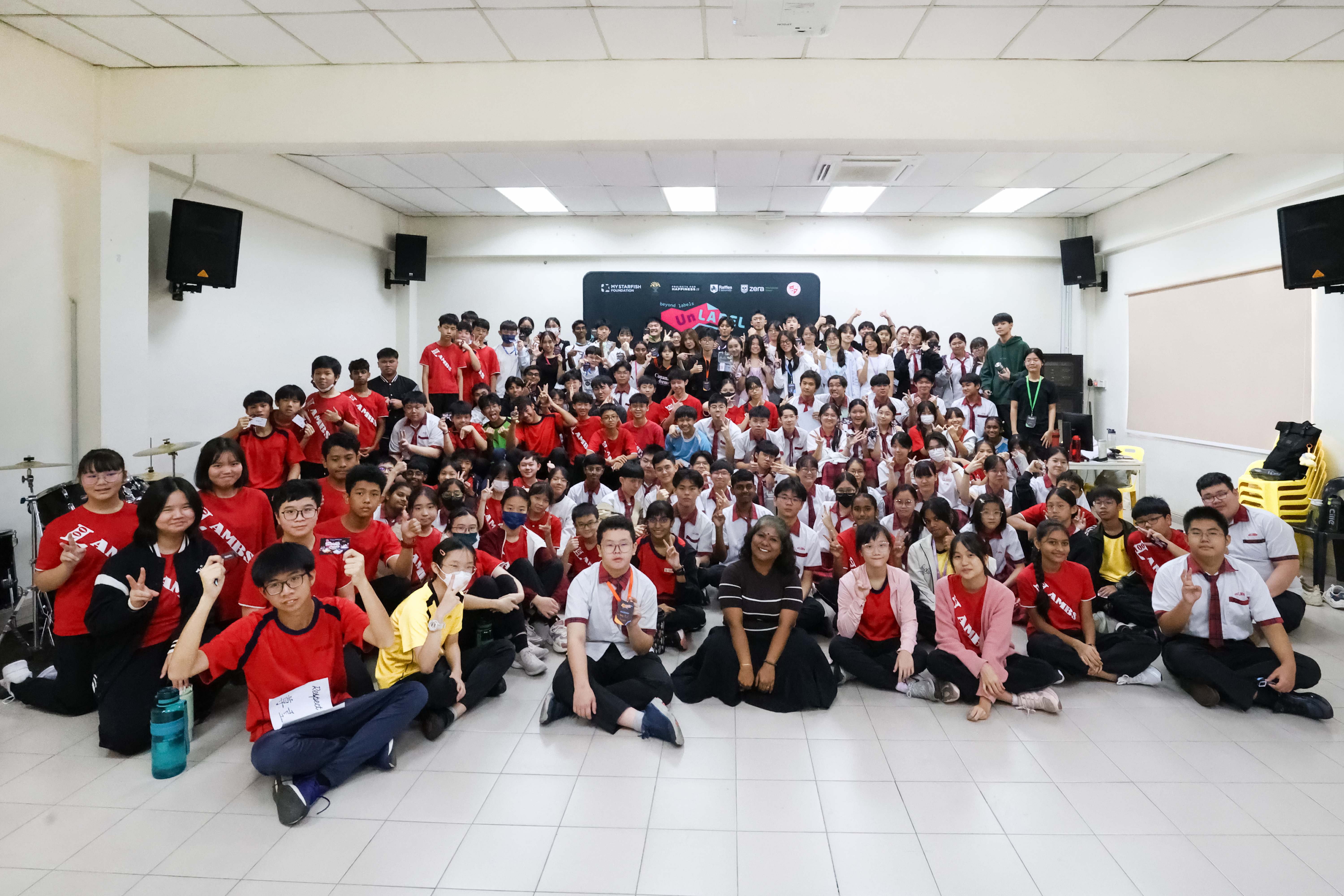
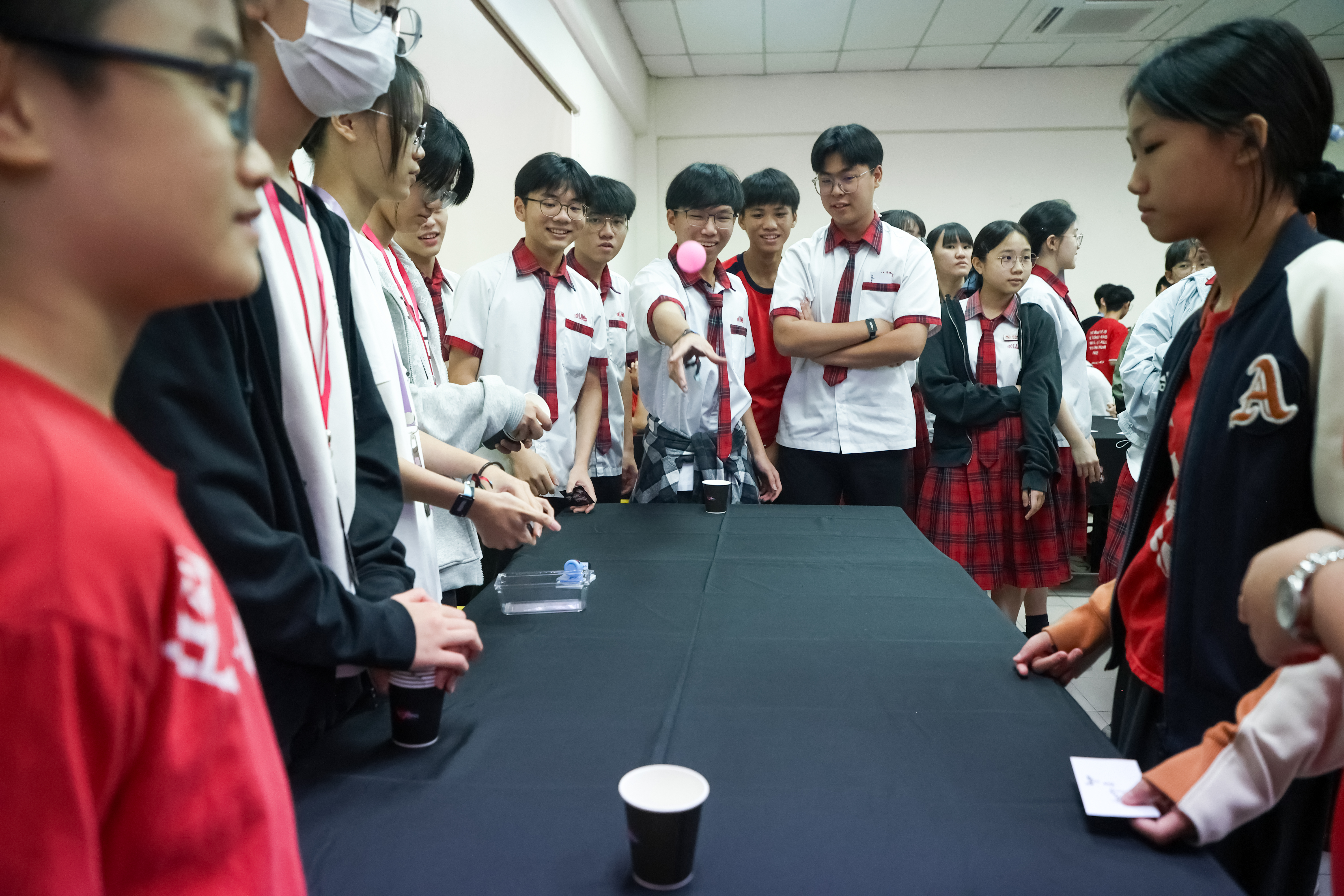
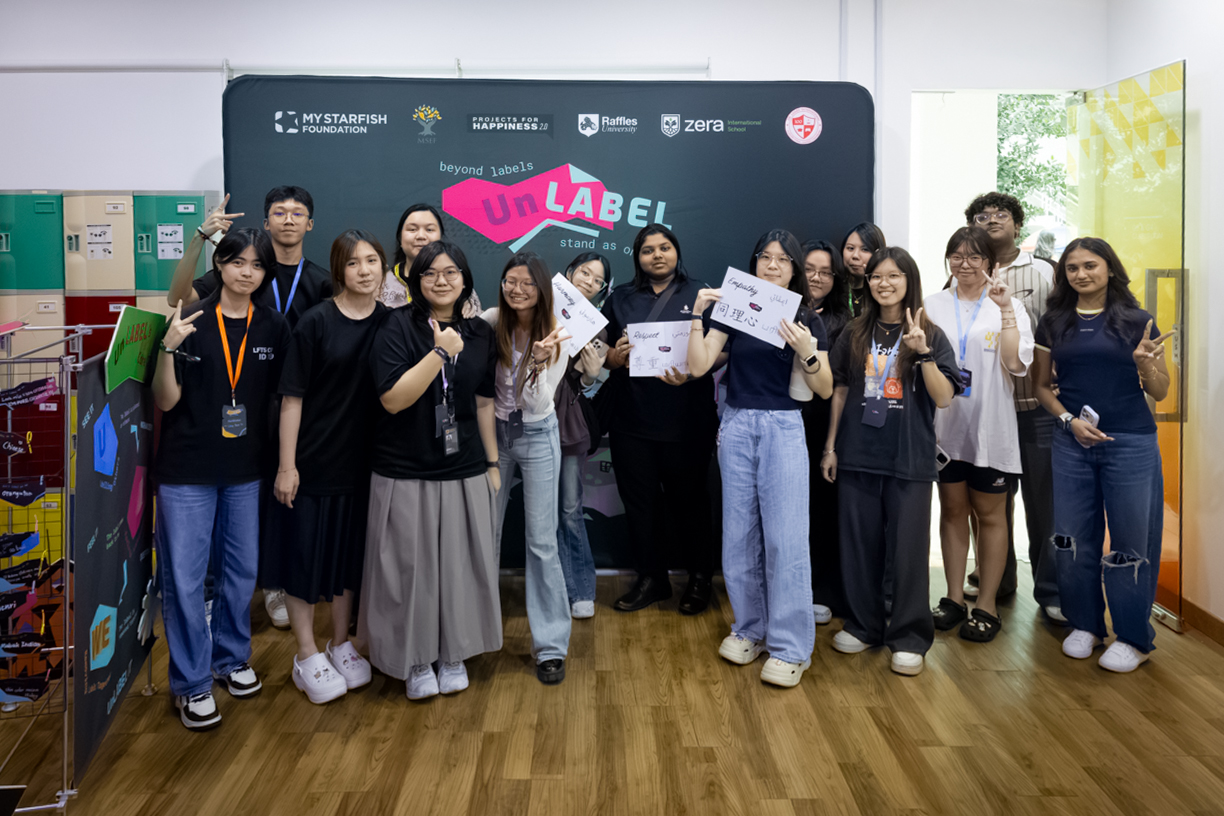
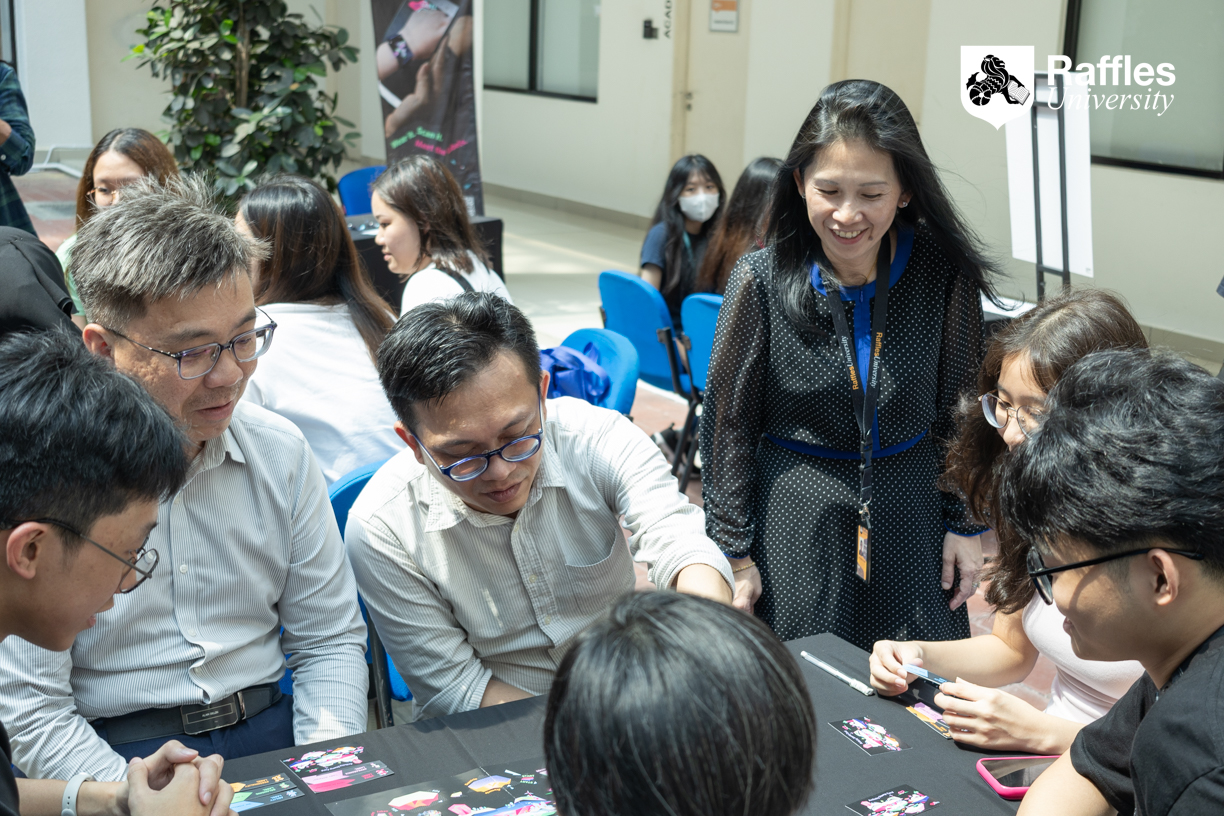
Following a preliminary test-run at Raffles University GradShow 2026, we brought UnLABEL Day to 100 Lambs International School, Zera International School and Raffles University. Activities included the Labellia Board Game, wearable wrist labels with augmented reality experiences, cultural activities, traditional games, interactive challenges, reflection cards, the UnLABEL Wall and the UnLABEL Pledge.
Each activity had a purpose beyond participation. Labellia encouraged reflection and cooperation rather than competition. Reflection cards and the UnLABEL Wall gave participants opportunities to express experiences with labels, while cultural activities encouraged interaction across different backgrounds. The pledge brought these individual experiences together through a shared commitment to challenge stereotypes and respect differences.
Psychology student collaborators supported facilitation, reflection and evaluation, helping participants explain their perspectives and reconsider assumptions. Pre- and post-event questionnaires and written responses examined changes in attitudes, while an Instagram campaign running from June to October 2026 extended the conversation beyond the events
4. Were there unanticipated difficulties? Budget constraints?
One difficulty was the difference in participants’ understanding of racial stereotyping. Some already recognized its consequences, while others struggled to identify familiar jokes or assumptions as stereotypes. We could not assume that everyone entered the experience with the same awareness or would interpret the activities in the same way.
Some activities also needed clearer instructions, stronger crowd management and more time for reflection. This revealed as important limitation which is participation alone did not necessarily create a deeper understanding. The experience depended on how facilitators explained its purpose, guided discussions and helped participants connect the activities to everyday life.
5. Language or cultural barriers?
Language was a more noticeable barrier than culture itself. Participants came from different racial, religious, age and educational backgrounds and not everyone was equally comfortable expressing themselves in a common language. Facilitators encouraged a shared language where possible and provided clarification when needed.
Cultural diversity, however, became a strength rather than a major obstacle. It gave participants opportunities to exchange perspectives and learn about experiences different from their own. This showed us that bringing people together was valuable, but making the conversation accessible was equally important.
6. What worked well? What did not work well?
What worked well was creating opportunities for participants to engage with the issue rather than only hear about it. Board games, reflection cards, the UnLABEL Wall and the pledge encouraged sharing and reconsideration of assumptions. Participants frequently identified personal reflection and interaction across cultural backgrounds as meaningful parts of the experience.
The participation records showed that 172 of 212 participants (81.1%) completed at least three of the five activities, while more than 200 labels were removed through the UnLABEL Wall. In the questionnaires, 155 participants (73.11%) recorded higher post-test scores, while 22 remained unchanged and 35 decreased. These findings were encouraging, but also showed that the response was not the same for everyone.
Written responses suggested greater awareness of unfair judgement, individual differences and the emotional effects of stereotyping. Some participants reported unchanged perspectives because they were already aware of these issues. What did not work consistently was translating engagement into deeper understanding for every participant. Our clearest lesson was that an engaging activity opens the conversation but meaningful reflection still requires time, clear explanations and thoughtful facilitation.
7. How many people benefited or will benefit from your project? Who are these people?
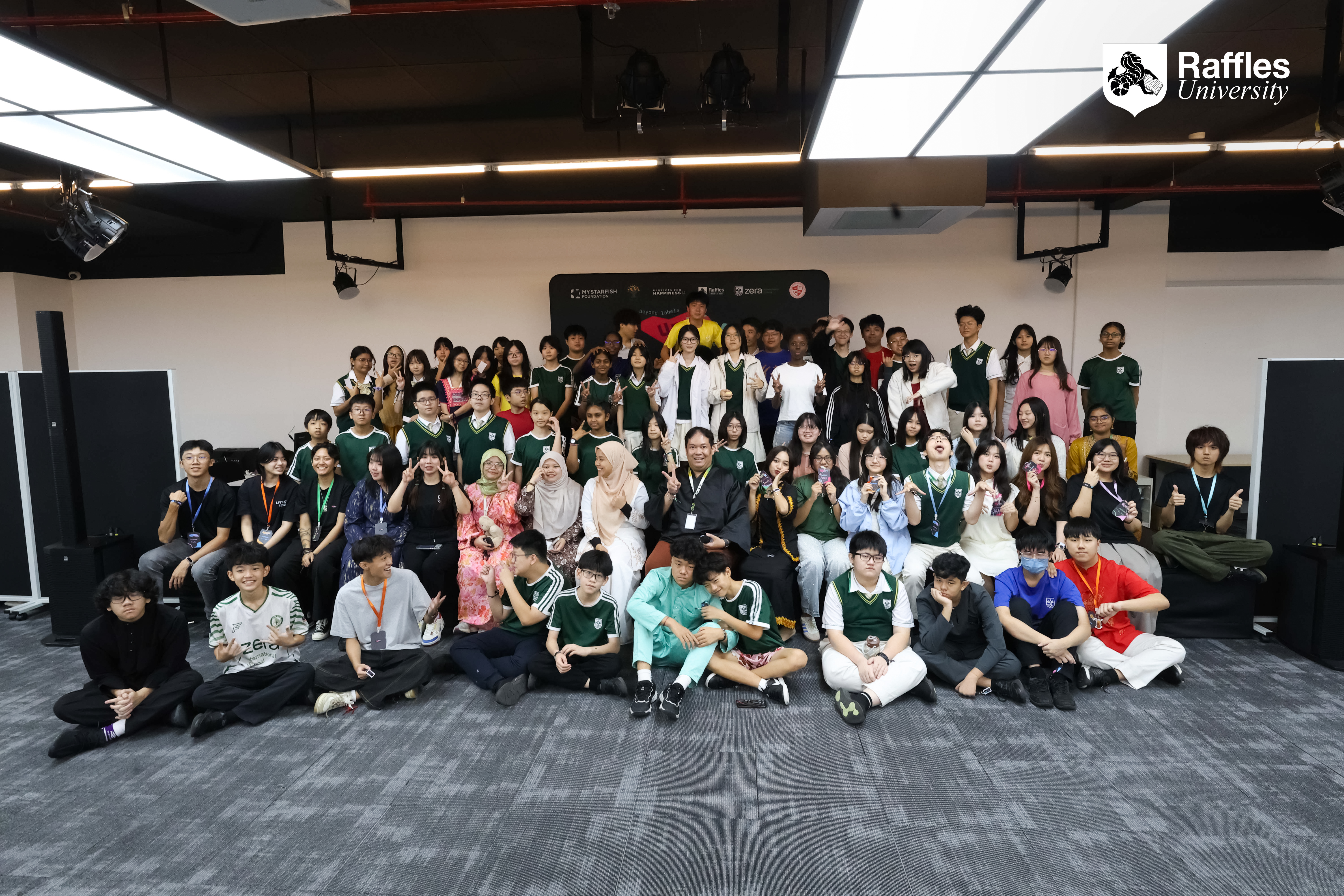
The main events involved 212 participants: 116 from 100 Lambs International School, 72 from Zera International School and 24 from Raffles University. Approximately 40 individuals also joined the preliminary test-run at Raffles University GradShow 2026, bringing the total to approximately 252 recorded participants’ engagements across the preliminary and main events.
Separately, 49 student facilitators benefited from training and practical experience in leading activities, communicating with participants and facilitating discussions. Altogether, UnLABEL recorded approximately 301 combined participants and facilitator engagements, extending its contribution beyond those attending the activities to the students helping deliver them.
Our Instagram awareness campaign also extended the project’s outreach beyond the participating institutions, generating 44,503 views and 1,052 interactions as of 20 October 2026. These figures represent online engagement rather than individual beneficiaries and are separate from the combined total above.
Our charity initiative further extended support to Aurora Intervention Centre and the children with special needs it serves. While UnLABEL began primarily around racial stereotyping, we recognized that labels can also shape how children are perceived through assumptions about their diagnoses or abilities. Through this initiative, we wanted to support children while reinforcing the message that every child deserves to be recognized for their individuality and potential. This support is separate from the participation figures above and reflects UnLABEL’s wider purpose and that is to help people see individual beyond the label.
8. What is the long-term impact and sustainability of this project? Is there a future for it?
Our long-term aim is for the reflection encouraged during UnLABEL to continue in everyday interactions: questioning assumptions, considering another person’s feelings and choosing understanding before judgement. The immediate findings provide a foundation for this ambition, but lasting changes in behavior remain a goal rather than an outcome we have already established.
We see a future for UnLABEL through continued school collaboration, interactive programmes and online engagement. Its U-I-WE framework could also be adapted to address labels involving appearances, ability, language and background. Our charity initiative supporting Aurora Intervention Centre offered an early extension of this message beyond racial stereotyping.
For future implementation, the priorities are clearer instructions, stronger crowd control management, more time for discussion, relatable examples and explanations in languages familiar to participants. Sustainability, for us, is not simply repeating an event. It is learning from each implementation so the next community receives a more accessible and meaningful experience.
Section II
1. How does or will your project contribute to happiness in the short and long term?
For us, happiness is not only about enjoying an activity. It is also about feeling heard, accepted and able to belong without being reduced to an assumption. In the short term, UnLABEL created opportunities for participants to share experiences, interact across cultures and reflect on how their words and actions affect others. Participants frequently highlighted these moments of reflection and connection as meaningful. Our findings concern awareness and participant experience, rather than a direct measurement of happiness.
In the long term, we hope these experiences encourage more respectful relationships and inclusive school and community environments . When participants carry greater understanding into their daily interactions, the message can continue beyond the event itself. This remains the change we hope to support: communities where differences are approached with curiosity and empathy rather than judgement.
Our support for Aurora Intervention Centre reflected the same belief. Looking beyond assumptions about a child’s diagnosis or abilities means recognizing their individuality, potential and place within the community. Whether addressing racial stereotypes or other forms of labelling, we want UnLABEL to contribute to a world where people feel valued for who they are.
2. Has your project changed the way you think about the world? How has it changed you?
UnLABEL changed how we see the everyday words and behaviors that society has learned to accept. Throughout the project, what concerned us most was not only that racial stereotyping existed but how easily it could become part of a joke or casual conversation. A comment that could hurt someone or create distance between communities could be spoke without much thought, simply because people were accustomed to hearing it. This made us question how something potentially harmful could become so familiar that we no longer felt the need to challenge it.
We began to understand that what feels harmless to the person saying it may feel very different to the person receiving it. Some participants described ignoring stereotypes or accepting them as part of everyday life. This reminded us that silence does not necessarily mean a label has no impact and familiarity does not make it acceptable. We became more conscious of the difference between what someone intends to say and what another person may have to carry afterwards.
The journey also challenged our own assumptions. We initially focused on racial stereotyping but some participants related more strongly to labels involving social class, appearance, ability or other aspects of their identity. These were not necessarily new forms of stereotyping; they were experiences we had not fully considered at the beginning. We realized that the issue was broader than one category of prejudice, people could be reduced to assumptions in many different ways before anyone took the time to understand them.
This gave us a deeper concern about the future. As society changes, what other difference might become reasons to judge or exclude someone? How many more labels could become normalized if we continue dismissing them as insignificant? We no longer see greater understanding as something that will atomically happen as people grow older. It is something we need to encourage and practice though the way we speak, listen and respond to one another.
The project changed our approach to making that change as well. We learned that encouraging empathy requires us to show empathy, including towards participants whose responses we found difficult. Understanding their perspective does not mean agreeing with a harmful stereotype. It means asking questions, listening carefully and helping them reflect without making them feel reduced to another label themselves. This reminded us that we also have a responsibility to examine our assumptions rather than approaching the project as though only others needed to change.
These experienced gave UnLABEL a deeper meaning and strengthened our commitment to continuing it. Our charity initiative supporting Aurora Intervention Centre extended this purpose to recognizing children with special needs beyond assumptions about their diagnoses or abilities. We cannot claim to remove every stereotype through one campaign but we now feel a stronger responsibility to contribute to how people see and treat one another. What began as a project addressing racial stereotyping became a more personal commitment, that’s to help create a society where differences invite understanding rather than judgement and where people are given the chance to be known before they are labelled.
Personal statement
"UnLABEL taught me that change begins with questioning what we have learned to overlook, seeing through another person’s eyes and recognizing that something being normalized does not make it harmless. It deepened my commitment to helping people see one another with greater empathy and to speaking up because just as words can hurt, our voices together can challenge the labels we have allowed to continue."
— Emberlynn Lee En Ling
“UnLABEL has taught me the true meaning of ‘small actions, big impact’. Seeing how simple activities and conversations could encourage people to reflect, rethink their assumptions and understand others better made me realise that even the smallest efforts can create meaningful change. It was a reminder that what may seem like a small action to us could mean so much more to someone else.”
— Lim Yan Shan
"Nearing the end of the UnLABEL campaign, I’ve come to realise that labels affect people in different ways, and racial stereotypes are not the only ones that shape how people feel and where they belong. I also discovered labels I had never heard of before. This experience taught me not to judge too quickly, but to listen, empathise, and understand others. Most importantly, I learned that while we should respect others, we should also have the courage to stand up for ourselves."
— Jewel Drishadvathi Nathan
“Being part of the UnLABEL campaign was more than just completing an event. It gave me the opportunity to listen to different perspectives and realise how something as simple as a label or joke can affect someone's feelings and sense of belonging. Through this experience, I learned that understanding others begins with listening without judgment, and even small efforts can encourage greater empathy and self-reflection.”
— Tan Ding Jay
Section III
Video
Image Gallery
 0 Days Left
28 Supporters
2 Favourited


