

 Support this Project



 0 Days Left
 73 Supporters
 0 Favourited

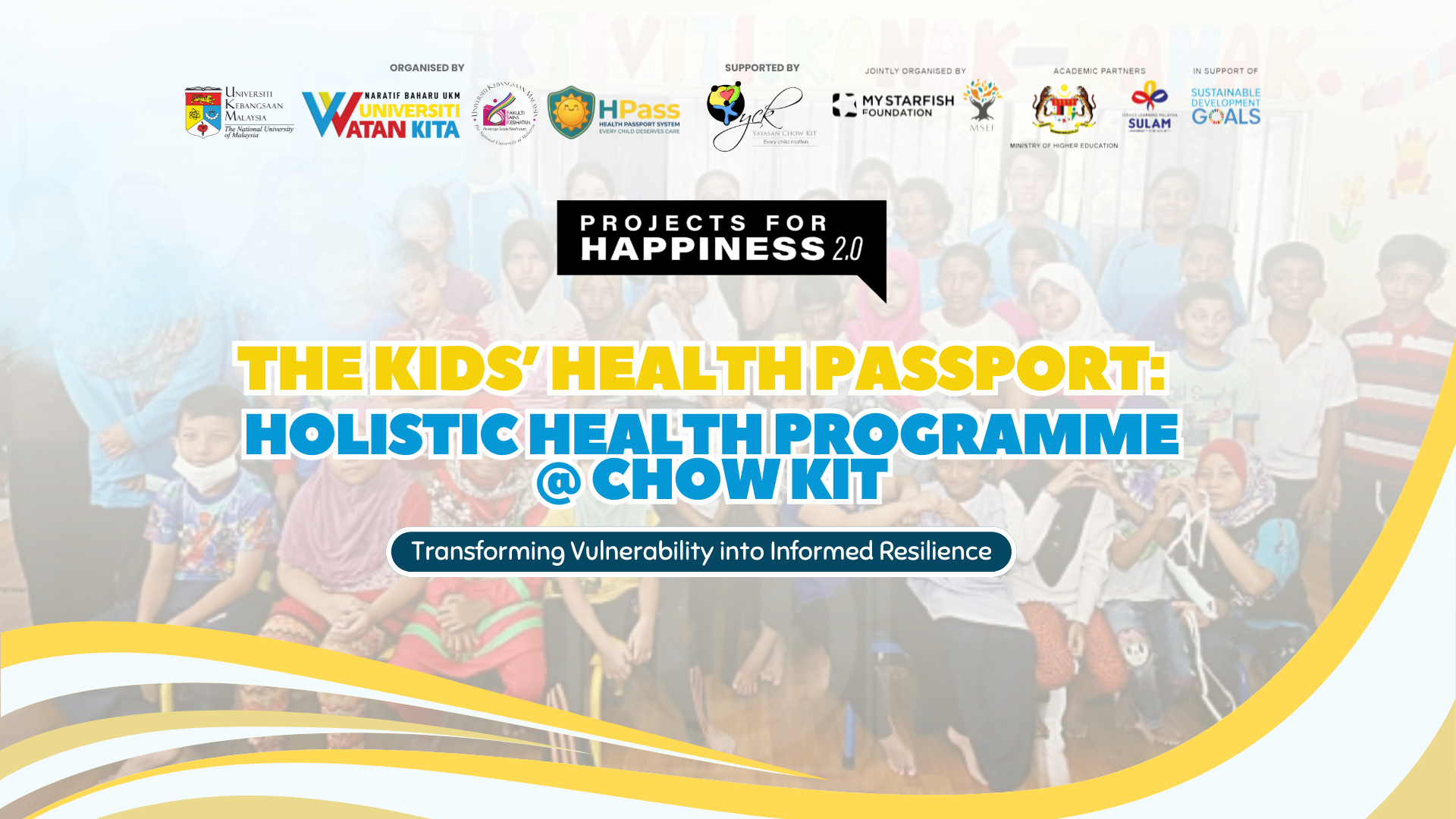
In the heart of Kuala Lumpur, the Chow Kit community is home to many children growing up in vulnerable and high-risk environments. Many of them come from low-income, marginalized, and undocumented families, where financial instability and limited access to essential services shape their daily lives. Because of these circumstances, consistent healthcare, proper nutrition, and early health education are often not accessible. Preventive healthcare is especially limited, leading many families to seek medical attention only when illnesses have already become severe. Over time, this has created a pattern where healthcare is largely reactive instead of preventive, with health issues being addressed only after they have progressed. This lack of early intervention and health awareness contributes to a range of ongoing health and social challenges among children and adolescents in the area. Issues such as poor hygiene practices, untreated medical conditions, and limited understanding of personal health and safety remain common. At the same time, exposure to social risks, including substance abuse, neglect, exploitation, and unsafe living conditions, further increases their vulnerability. Without proper access to health education and preventive care, these challenges often extend into later life and affect overall physical, emotional, and social well-being.
The Kids’ Health Passport: Holistic Health Programme @ Chow Kit was developed in response to these realities. This student-led initiative from the Biomedical Science Programme, Universiti Kebangsaan Malaysia, focuses on empowering vulnerable children through preventive healthcare education, early screening, and continuous health awareness. The programme is designed to bridge the gap in access to basic health services while also promoting long-term behavioural change among participants.
The programme takes a holistic approach that integrates physical health, mental wellness, and health education into a single intervention framework. Rather than focusing only on short-term care, the initiative is structured to build awareness and encourage children to take ownership of their own health. The aim is to equip them with practical knowledge and confidence so they can make informed decisions in their daily lives and develop healthier long-term habits.
The main activities begin with multidimensional health screenings involving approximately 120 children aged 7 to 15 years old. These screenings include basic health assessments such as BMI, blood pressure, blood glucose, and blood cholesterol measurements, as well as HIV and syphilis screening. These assessments help identify potential health concerns at an early stage while also introducing children to the importance of routine health monitoring. Through this process, participants gain clearer insight into their own health status and are encouraged to adopt more proactive health practices.
Alongside the screenings, interactive and age-appropriate educational modules are conducted to make health education more engaging and accessible. These modules cover topics such as personal hygiene, body safety and sex education, and substance abuse awareness. Activities are delivered through games, group discussions, demonstrations, and interactive sessions to ensure active participation. This approach helps simplify important health information while encouraging children to understand and apply what they learn in their everyday lives.
A key feature of the programme is the introduction of a personalised “Health Passport” for each participant. This serves as a simple record where screening results, educational progress, and health recommendations are documented. It allows children to track their health status over time and better understand their own development. More importantly, it encourages a sense of responsibility and ownership towards personal health from a young age, while also acting as a continuous reminder of healthy practices beyond the programme sessions.
To strengthen long-term impact, follow-up activities are conducted after the main programme. These include reinforcement sessions aimed at monitoring behavioural changes, encouraging consistency in healthy habits, and supporting participants in applying the knowledge gained. This continuation ensures that the programme extends beyond a one-time intervention and contributes to sustained improvements in health awareness and behaviour.
The expected outcome is improved health literacy among children, earlier awareness of potential health risks, and increased adoption of healthy lifestyle practices. The programme also aims to build confidence among participants in managing their own health and understanding basic health information. On a broader level, it is expected to strengthen community awareness around preventive healthcare and reduce gaps in health access among underserved populations.
The success of the programme relies strongly on collaboration with organisations, sponsors, and community partners. Support from MyStarfish Foundation and other contributors enables the delivery of free preventive healthcare services and educational resources to children who are often excluded from mainstream healthcare systems. This collaboration also supports efforts to reduce health inequalities within vulnerable communities.
Overall, the programme is designed as a scalable and sustainable community intervention model aligned with Sustainable Development Goals 3 (Good Health and Well-being), 4 (Quality Education), 10 (Reduced Inequalities), and 17 (Partnerships for the Goals). The programme focuses on creating a meaningful and lasting impact by combining health screening, education, and continuous engagement to support healthier and more informed future generations.
 0 Days Left
73 Supporters
0 Favourited
0 Days Left
73 Supporters
0 Favourited


