

 Support this Project



 0 Days Left
 12 Supporters
 0 Favourited

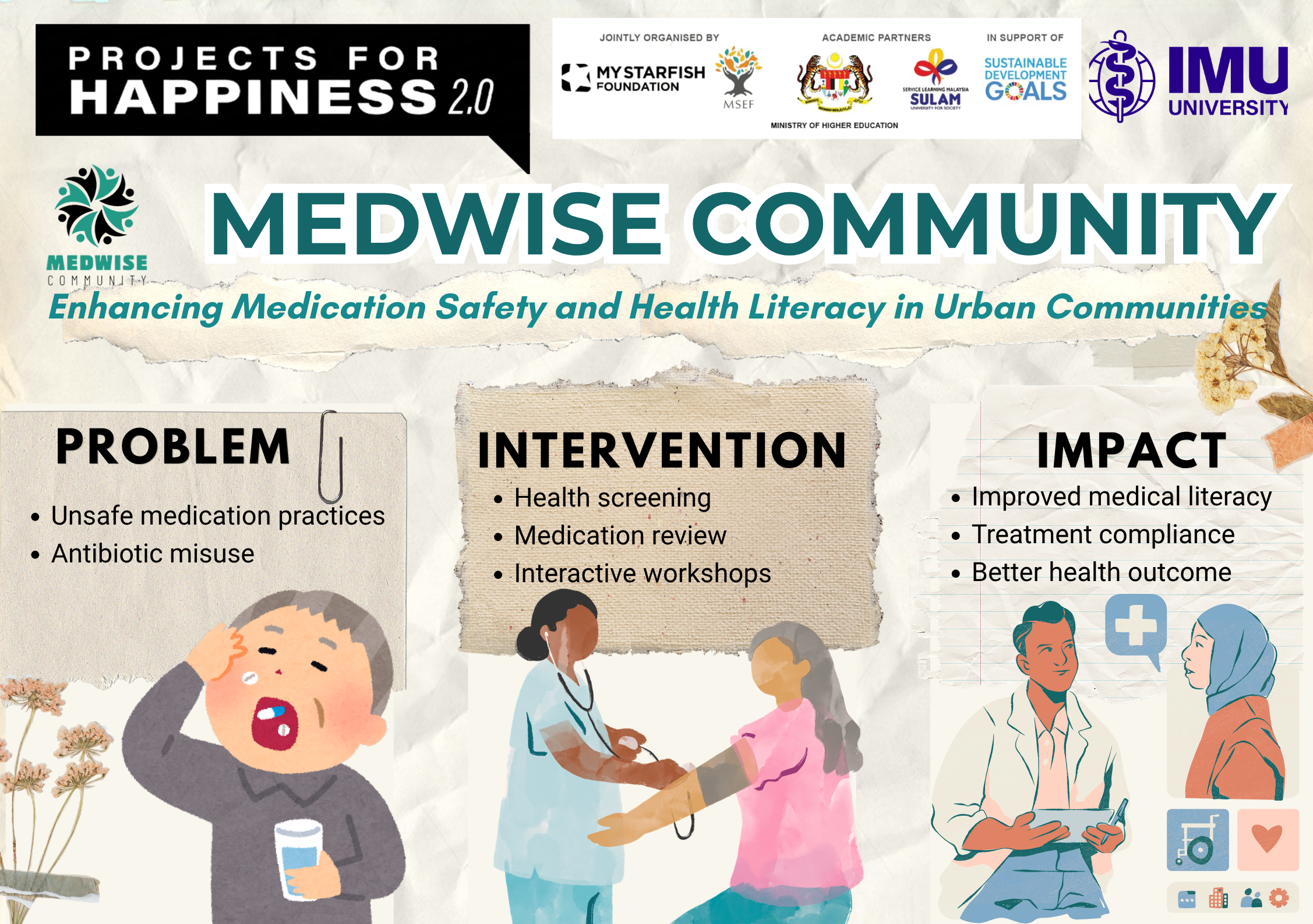
Antibiotic misuse remains a significant yet often under-recognised public health issue, particularly in underserved communities such as residents of People’s Housing Projects (PPR). In many Malaysian households, antibiotics are commonly managed without proper guidance, where individuals may stop antibiotics once they feel better, reuse old prescriptions, share medicines with others, or take incorrect doses. While these practices may seem harmless, they carry substantial health risks. Evidence shows that self-medication and inappropriate antibiotic use remain prevalent, with many individuals lacking adequate understanding of proper medication use and its consequences. This contributes to treatment failure, adverse drug reactions, and the growing burden of antimicrobial resistance (AMR). In Malaysia, AMR is an increasing public health concern, reflected in rising resistance rates in common infections. The Malaysian Action Plan on Antimicrobial Resistance (MyAP-AMR) 2022–2026 highlights the need to improve public awareness and understanding of AMR, particularly in high-density, lower-income communities where health literacy gaps and limited access to personalised counselling persist. Despite ongoing health campaigns, most interventions remain passive and often fail to translate into sustained behaviour change.
The MedWise Community Project aims to bridge this gap through a structured, interactive, and participant-centred intervention. Moving beyond traditional one-way education, the project adopts a station-based approach that integrates health screening, medication review, interactive learning, and personalised planning. By starting with the medications participants already use at home, the project identifies real-life risks and provides tailored counselling that is directly relevant to each individual. Participants are guided to better understand what their medications, especially antibiotics, are for, how to use them correctly, and what practices to avoid, while also gaining insight into important concepts such as antibiotic resistance. Through practical tools like medication charts and direct engagement with facilitators, the project empowers individuals to translate knowledge into daily practice, thereby improving medication adherence, safety, and overall health outcomes.
Support from My Starfish Foundation and the public is essential to ensure the successful implementation and sustainability of this initiative. Their support enables the project to reach underserved communities, provide necessary resources such as screening equipment, educational materials, and medication management tools, and deliver a high-quality, impactful intervention. Beyond immediate benefits, this project contributes to broader public health goals by supporting preventive care, reducing medication-related harm, and aligning with national efforts such as the MyAP-AMR strategy to combat antimicrobial resistance. At the same time, it fosters the development of future healthcare professionals by providing hands-on experience in community engagement and patient-centred care. With strong support, the MedWise Community Project has the potential to create meaningful, lasting improvements in medication safety and transform medication use from a routine habit into an informed, safe, and responsible practice.
MedWise Community is a structured, community-based health education programme designed to improve medication literacy, reduce unsafe medication practices, and empower residents in selected PPR communities in Seremban to manage their health more confidently. The project combines health screening, personalised counselling on medication safety and storage, interactive learning and follow-up support to create meaningful and measurable behavioural change towards medication literacy.
The MedWise Community Project aims to improve antibiotic safety, knowledge, and behaviour among residents in three selected PPR communities through a structured and interactive intervention. The project is expected to enhance participants’ understanding of correct antibiotic use, reduce unsafe practices such as self-medication and antibiotic misuse, and improve adherence and antibiotic organisation. The impact of the project will be evaluated using both quantitative and qualitative measures.
In terms of reach, the project aims to engage approximately 50 to 80 participants per PPR, with at least 80% completing the full intervention. Knowledge improvement will be assessed by comparing baseline and post-intervention questionnaire scores, with an expected increase of at least 30–40% in participants’ understanding of antibiotic use, storage, and practices. Residents who participated in earlier phases will be invited for a follow-up 4 months later to reassess post-intervention outcomes in areas such as self-medication with antibiotics, sharing antibiotics with others, premature discontinuation of treatment, storage of leftover antibiotics, healthcare-seeking behaviour, and understanding of antimicrobial resistance (AMR) using a post-intervention questionnaire and compare it to their baseline findings with a target of at least 60% demonstrating positive changes.
Additionally, clinical engagement will be measured through the number of participants undergoing health screening, the identification of abnormal findings requiring referral, and the detection and resolution of antibiotic-related problems during the antibiotic review sessions. Participant satisfaction and perceived benefit will also be assessed, with the expectation that at least 80% of participants report increased confidence in managing their antibiotics. These combined metrics will provide a comprehensive evaluation of the project’s effectiveness in improving medication safety within the community.
 0 Days Left
12 Supporters
0 Favourited
0 Days Left
12 Supporters
0 Favourited


